'I compute, therefore I am.'
This is a talk I gave at a symposium for The Thomistic Institute in Ireland at St. Patrick’s Pontifical University, Maynooth, on the theme of ‘Being Human in the Age of AI’ on April 11th 2026, alongside Ezra Sullivan OP, Mahon McCann, Gaven Kerr, and Conor McDonough OP.
You will rejoice to hear that no disaster has accompanied the commencement of an enterprise which you have regarded with such evil forebodings.[1]
This is how Mary Shelley begins her famous Gothic novel, Frankenstein. I begin in the same place as Shelley for three reasons, the first of which is obvious, given the theme of our symposium, ‘Being Human in the Age of AI.’
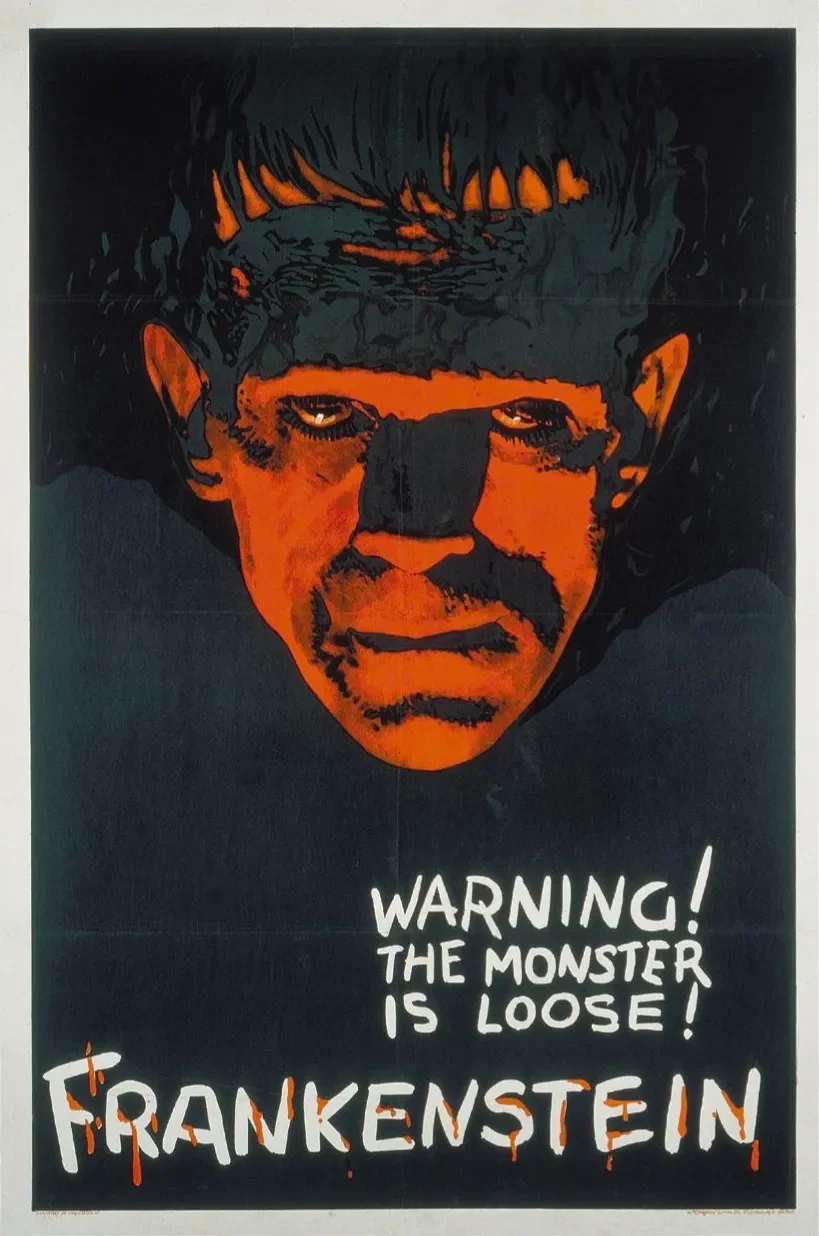
Frankenstein is a story we know well: Victor, a university student of the hard natural sciences, discovers a way to construct an intelligent life form, a being he refrains from naming but which he variously calls ‘creature,’ ‘monster,’ ‘fiend,’ ‘wretch,’ and even ‘demon.’ Yet, Victor produces his monstrosity not simply out of his own artifice; rather he coordinates the natural powers he discover through his chemical and electrical studies, and he does so by arranging organic not inorganic matter, for, quite morbidly, he uses the stolen remains of the recently deceased. This is actually a scientifically reasonable shape for the story to take, for more than two-hundred years later we still have not been able to produce life out of non-living matter (de novo abiogenesis), let alone intelligent life, for we can do nothing except wield what nature provides.
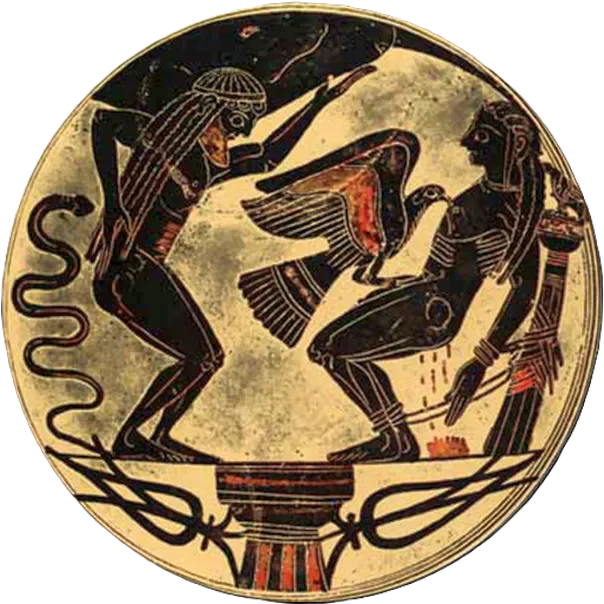
This is a point to which I will return, but for now, my second reason: I begin with this story also because of the alternate title Shelley provides for the novel, calling it Frankenstein; or, The Modern Prometheus. With her use of the term ‘Prometheus’ we are taken back to the ancient Greek myths, where we find Prometheus, a child of the Titans, bound and condemned to tortured for offending the gods. His crime? He tricked Zeus by stealing fire from the gods in order to introducing science and technology to the human community.
Accordingly, since the time of ancient Greece, the figure of Prometheus has symbolized man’s striving for scientific knowledge and technological innovation, a striving which is neatly encapsulated in the singular human desire for predictive power. This desire is the dynamo of modern science, inasmuch as it explicitly strives to mathematically pattern the natural world in order to predict its actions, and thus develop technology that takes power over its happenings. Interestingly, the object of this desire is already contained the name ‘Prometheus,’ which means ‘fore-thinker: pro-metheus.’
Again, this is a point to which I will return, but for now, my third reason: I begin with these opening lines because it nicely formulates my own judgment about the supposed threat of our modern Prometheus, the technology most unfortunately named ‘Artificial Intelligence (AI).’[2] Though there are certainly many reasons to be apprehensive about this technology and how it is going to shape human life and culture into the future, I do not think the disasters portended by so many will actually come to pass—I do not think we are bidding our time before the onlining of Skynet.
Again, more on this later, but for now let us begin by getting some clarity over the nature of the technology as it currently stands. Yet before I do, I wish to note some tension in my use of language. Though I will make every attempt to avoid anthropomorphizing language, I will at times use terms in ways that appear to impute human agency to AI, mainly because these are the terms that are currently in use by those developing it—and this so for many reasons, some prosaic, some confused, and some problematic. However, at all times it should be remembered that what we are actually talking about here is a tool and a machine. Though I assert this now—that it is a tool—exactly why I affirm this—the principal assertion of my presentation—should become clear by the end of my input.
Now, with these qualifiers in place, let us look at what the technology is currently able to do.
What is Artificial Intelligence?
As it currently stands, AI rests on the success of so-called ‘artificial neural networks.’ These are software programs whose operations are modeled on the behavior of the neurons of the animal brain. While this technology has been around for decades in more rudimentary forms, recent successes in the software itself, and in its undergirding hardware, have led to an exponential shift in what the technology can accomplish.
This shift relates to the way these networks can process input so that they progressively ‘learn’ to pick out salient patterns in any pertinent set of data. The network learns by being ‘trained’ on an immense pool of data, most of which is provided by the internet, and its learning involves weighting the nodes of its neuron-like architecture in a way that reflects patterns found in the data. Based on this ‘training,’ the corresponding model can then receive prompts and provide probable responses on the basis on its pattern recognition. In practice what this means is that when we prompt an AI model with some statement, question, or image, etc., it responds by predicting the most-likely output series for such a prompt. And it does so in a piecemeal manner, by giving us the next most-likely item in the series—given the previous items of the series, and given what has been encoded in it based on its training set—word by word, pixel by pixel, or frame by frame, depending on what the model is tailored to process. And so, simply stated, AI predicts one thing at a time, and it does so in an entirely probabilistic way, on the basis of the connections it has discerned, mathematically, in a particular data set.
Now, on the basis of this brief description, we can already take a step back and assess exactly how to categorize the technology as it currently stands, and so we ask, ‘What is it?’ In answer we can say that it is a mechanism that gives predictive responses to prompts based on the probable connections it has drawn between units of data. But we must then immediately become cognizant of its inherent limitations, the first of which is that the technology is not at all capable of or interested in truth—for probabilistic computation, however refined, will only ever give probable results. And this is precisely why contemporary AIs ‘hallucinate’ false connections between things while simultaneously asserting certainty in their responses. The second limitation is found in their heavy reliance on human creativity through their training data—which is ordinarily that vast reservoir of human creativity we call the internet. And this is precisely why the ‘creativity’ of these models can only go as far as the human creativity upon which they feed.[3] Finally, we should note the intense involvement of human agents in their ‘training,’ for they need humans to provide the rules and parameters by which they are to operate, and they need humans to provide positive and negative feedback while they are being trained in order that their inner weightings can be adjusted to respond to the particular data set for which they are being trained.
Now, having describing the technology as it currently stands, and having noted some of its limitations—those with respect to truth, creativity, and human control—we are already in a position to see how AIs are not intelligent like us:
First, we see that they are not knowing or understanding, they are not aware or self-aware, conscious or self-conscious, and nor are they reasoning or performing judgments; they are merely manipulating the numerical connections of a data set in order to draw probable connections.
Second, we see that they are not trading in meaning at all, for they are not meaningfully responding to meaningful prompts, they are not following through on meaning, by moving from meaning to meaning; again, they are simply manipulating numbers that stand in for meaning and the interconnectivity of meaning.

Summary Position
Now, all this can be summarized by saying that AI is a machine that computes, and since to compute is to calculate, AI is a machine that calculates—it is a complex calculator, and nothing more (notwithstanding the remarkable things it can currently achieve).
It performs its function by reducing all the input it receives to numbers, before manipulating these same numbers in order to predict what is likely to come next in any given series. Therefore, even if the mathematics, software, and hardware by which it operates are incredibly complex and sophisticated, so-called AI computing systems are just that, computers performing calculations; so that they are, in a word, glorified calculators. This is precisely why Bernardo Kastrup, the Dutch philosopher and computing engineer, says the following (which I will here quote at length),
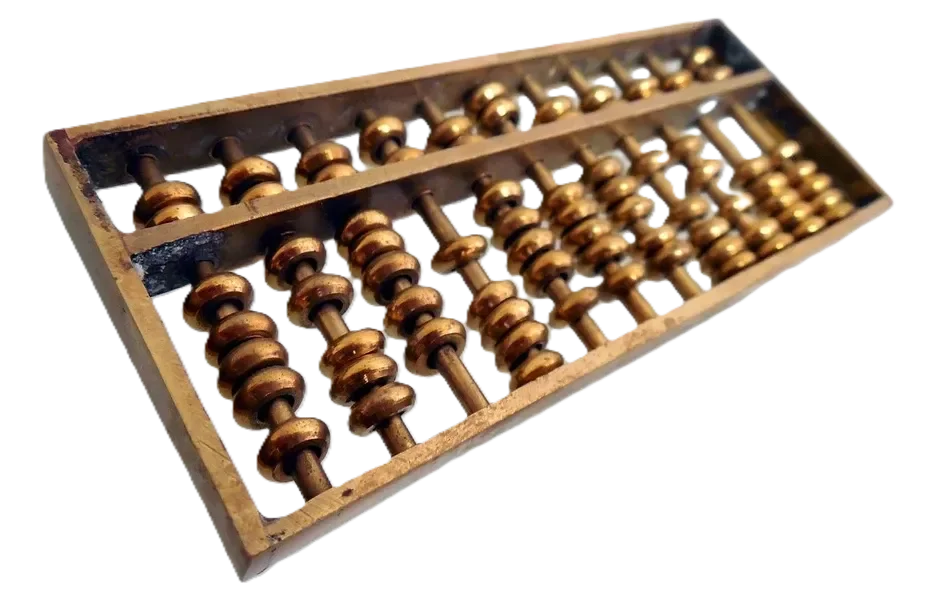
Everything a computer does can, in principle, be done with pipes, pressure valves and water. The pipes play the role of electrical conduits, or traces; the pressure valves play the role of switches, or transistors; and the water plays the role of electricity. Ohm’s Law—the fundamental rule for determining the behavior of electric circuits—maps one-on-one to water pressure and flow relations. Indeed, the reason why we build computers with silicon and electricity, instead of PVC pipes and water, is that the former are much, much smaller and cheaper to make… That’s the sole reason why we compute with electricity, instead of water… Electricity is not a magical or unique substrate for computation, but merely a convenient one. A wooden tool called an ‘abacus’ also computes. [4]
Now, with this in mind, Kastrup immediately continues,
Ask yourself: do we have good reasons to believe that a system made of pipes, valves and water correlates with private conscious inner life…? Is there something it is like to be the pipes, valves and water put together? If you answer ‘yes’ to this question, then logic forces you to start wondering if your house’s sanitation system—with its pipes, valves and water—is conscious, and whether it is murder to turn off the mains valve when you go on vacation.[5]
So much for the current technology.
But you might reasonably respond: ‘Perhaps we are only at the early stages of an engineering process that will exponentially quicken as AIs are included in their own production and programming, training and testing—all of which is actually already beginning to happen.’ And you might then be tempted to continue: ‘Perhaps in the future something higher will emerge on this basis, something with awareness and self-awareness, able to know and understand, able to judge and choose, and able to determine its own actions and act out of its very self.’ My first response to this latter musing would be just like that of Kastrup, I would shift the burden of proof: ‘If you think such is possible, don’t merely assert it, show me why I should think this, for I currently have no reason to think so. I have no reason to think that any such operations will emerge from the arrangements and function of material parts, however complex they become.’ But that would be only a first response, and a negative one at that. I would then respond with a positive proposition as to why intelligence is in principle impossible to produce by artifice, even having received the fire of science and technology from Prometheus. But to make this case, we would need to know what awareness and consciousness are, as well as what knowing and understanding are.
So, What is Intelligence?
So, having achieved a basic understanding of the technology as it currently stands, let us now turn to the nature of intelligence: What is human intelligence? Is it binary: there or not there; a continuum: more or less; or multidimensional: doing many different kinds of things?
I propose that it is all three, so that when intelligence is actually present, it performs many different kinds of actions, and each of these more or less powerfully. We could then list its many actions as knowing, understanding, and evaluating; measuring, determining, and calculating; remembering, predicting, and anticipating; judging, opining, and believing, and we could go on. Moreover, I take it that when intellect is seeking knowledge, it does so in several different ways: deductively, by reaching conclusions according to the laws of logic, inductively, by drawing inferences from the accumulation of experiences, and abductively, by making judgments according to a kind of probabilistic or best guess intuition. Now, if all this is the case, we see that genuine intelligence is an incredibly capable and agile power, and that current AI technology pales in comparison to its capability and agility—and that this is the case even while it can far surpass human intelligence in certain restricted operations, such as those of quantification and calculation, as also in their ability to access vast resources of information.
Yet, having said all this, and notwithstanding the vast array of actions performed by the intellect, let’s go right at the heart of intelligence in order to see everything more clearly—for doing this will cast light on all above-listed intelligent actions, while also revealing how some can be shared by entities, whether natural or artificial, that are not actually intelligent, even while they proceed intelligently in a restricted manner. To go to the core I am largely going to marshal the thought of Thomas Aquinas and Edith Stein, while also considering the thinkers that lay in the wings of their thought, primarily Plato and Aristotle. With these thinkers in hand, we will be able to gain insight into the central activity of intelligence, the core activity that specifies its nature.
First, let us look at the meaning of the word itself. The English term ‘intellect’ comes from the Latin phrase ‘intus legere,’ which literally means ‘to read inwardly.’[6] Accordingly, the history of language teaches us that intelligence is a capacity to read from within the meaning of the things. This is first accomplished when the intellect reads from each thing its formality, and thus comes to know ‘what’ they are; and it does so largely on the basis of seeing ‘how’ things act—for the actions of things reveal their being. Then, with this basic grasp in place, the intellect can examine each thing for its other causes, their material, efficient, and final causes, and thereby come to know ‘why’ each thing is in an appropriately full way. The most important of these causes, and the cause of the causality of the others, is the final cause, for it is in the light of the final cause that the intellect can come to know each thing with an appropriate fullness—and indeed, the intellect cannot rest until it has this why. ‘What, how, why,’ these questions are the dynamo of intelligence, and intelligence answers these questions by reading reality for its meaning. Now, the way the intellect ‘reads’ meaning is by apprehending, as we have seen, the forms of the realities it considers. Such apprehension involves a kind of intellectual seeing, technically called intuition, which for Aquinas and Aristotle involves abstracting the intelligible from the sensible. This act of abstraction renders the meaning of each thing for the intellect, and it is the grounding basis of all further intellectual activity. This act of intellectual intuition, accomplished via abstraction, is the very core of intellectual activity, its heart, and it is the nexus through which everything else related to intelligence passes. In this nexus is found the specifying difference of human nature as a species.[7]
Then, having inwardly received the meaning of any given reality in this way, the intellect can become productive of a concept by which the reality is understood. To be productive in this way the intellect must discern the essential features of the object, and it must combine these features into an articulated whole, which we call its definition. When the intellect produces an accurate and comprehensive definition, it has then perfected its initial intuition of the thing with a renewed intuition that is now mediated by a clear and precise concept. This is a kind of depth seeing, and that is why we call it understanding—in understanding the intellect reaches out and grasps the reality. Then, on the basis of its concepts, the intellect can set about reasoning about things, composing and dividing its concepts in propositions, and these propositions can be set alongside each other in arguments through to which further degrees of understanding are attained. And it is in just this way intelligence journeys toward truth, here understood as ‘the adequation of intellect and things’[8]—for this is the proper object of intelligence, to understand being in truth.
The Distinctive Feature(s) of Human Intelligence?
Now, having set forth a basic anthropology of intellect, let us focus on the decisive feature that distinguishes human intelligence from so-called artificial intelligence (and indeed from every natural being that in some or other way participates in reason, such as animals, or at least the higher animals).
The intellect sees meaning; the intellect grasps meaning and understands meaning; the intellect is motivated by meaning and moves forward according to meaning, reasoning from meaning to meaning—and it does all this meaningfully. Upon this basis, we recognize the primary correlation in reality, the correlation between persons, possessing intelligence, and things, possessing meaning. The terms capturing this correlation are subject and object, where persons are understanding subjects, and things are the objects understood. The characteristic subjectivity of the person is revealed most clearly in the awareness and self-awareness that accompanies understanding. The upshot of the awareness and self-awareness that accompanies intellectual activity is captured by the singular word ‘consciousness.’ As intelligent, the personal subject is conscious, and is thus aware of its knowledge, aware of its understanding, aware of its reasoning, and aware of everything in human life that is anchored in intelligence.
Therefore, in every intelligent being, there is a subjective pole of understanding, a subject that knows and understands, while also being aware that and what it knows and understands. Standing opposite this subjective pole as its objects are the things that possess meaning, both in themselves and in their interrelation with one another. And this latter is inclusive of all human creativity, whether that be in the form of the literature, music, and fine art of human culture, or whether that be in the form of the contents of the natural sciences together with their technological fruit. But no AI stands in reality in this way. There is no conscious subject in AI, since there is no pole of understanding that is both aware and self-aware. This means that there is no intuitive apprehension of meaning, and no corresponding motivation to move toward meaning; and there is no moving from meaning to meaning in a meaningful way. There is then no genuine correlation of subject and object, there is only the manipulation of numerical symbols that stand in the place of meaning.[9]
And this is precisely why you need a human interpreter at all sides of the operation of AI: You need human engineers to create their meaningful programs, and human engineers to set their meaningful rules and parameters; again, you need innumerable human individuals to create the meaningful data set upon which it is trained, and you need numerous humans that train the AI with meaningful feedback, both negative and positive, so that it can become appropriately weighted to respond to the meaningful patterns of reality. Now, without this bracketing on all sides by humanity, without this embrace by those who actually understand, one could rightly ask what on earth AI is doing—for it would then seem to me to be as meaningless as a stack of money on a desert island.
Now, after this focusing, let us look at everything again, but briefly and with simplicity:
Intellect understands meaning; intellect and meaning are tightly correlated as subject and object; intellect and meaning are inconceivable without one another. But AI is not an intelligent subject of understanding; there is no subjective center that stands opposite meaning with understanding; moreover, AI does not trade in meaning, AI has nothing to do with meaning as such, for it operates merely upon mathematical symbols that stand in for meaning. Simply stated, with AI there is no understanding and there is nothing understood—no understanding and nothing understood.
Artificial Intelligence—An Oxymoron of the Highest Order
Now, though you may be convinced at this stage that the technology is not and won’t be intelligent, you might still wonder why genuine intelligence rules out the possibility of it being produced artificially (as I claim it does). So, let us look again at the problem; in the end, it is my hope that you, like me, will see that the phrase ‘artificial intelligence’ is oxymoronic in the strongest possible sense—even more so than the phrase ‘square circle.’[10]
Let us begin at the most distant reason to think so, before proceeding to the strongest argument.
First: All the intelligence of which we know is the intelligence of a natural substance. But precisely as artificial AI is not a substance; indeed, in principle it can never be a substance, for it has no substantial form, and thus no formal unity. It is then not one thing, but a composite of parts operating together in a mechanistic manner. Thus, in Thomistic terms, AI is not even an entity in the proper sense, but an accidental arrangement of natural entities; it is, in brief, an accident. Now, as it currently stands, which will likely be the way it continues as it develops, the situation is worse. Since AI is currently a software program operating on some hardware, and since both are artificial and mechanistic, AI is essentially an accident of an accident—and thus most definitely not an entity in the proper and full sense. Therefore, we have no reason to impute intelligence to it, now or in the future, for there is no evidence that a natural power like this can be possessed by anything but a natural substance.
Or at least the burden of proof is on those who posit this possibility.
Second: All the intelligence of which we know is the intelligence of a living substance. But again, precisely as artificial, AI is not a living thing: first because, as we’ve already seen, it is not even a substance; then because, life always manifests a holistic unity that no artificial mechanism exhibits. In every mechanism, the parts precede the whole, while functioning with relative independence of one another, whereas in a living thing the whole precedes its parts, and all parts are organs that function together for the sake of the whole. Therefore, though AI may someday be composed of organic matter or living substances, like Frankenstein’s most unfortunate creature, this does not at all imply that it itself would be living, for we would have to furnish a non-material unity to ensure that the whole would precede the parts. [We can talk about this again in the question time if you like.]

And just so, for these two reasons, we see a major problem for AI. The functional unity of everything artificial is determined by our use of it. Artificial mechanisms have a unity determined by their function for us, determined by our design of them and our use of them; they have no unity in themselves, their unity is externally imposed by us and entirely derivative of our design and use. We can no more make a substantial or living unity out of something artificial than we can create out of ourselves—for our creativity extends no further than this: that we understand nature and wield its natural powers, no more. And with this last point we see why we only find the power of intelligence in natural living substances, for intelligence is a power of the natural world, and we can no more artificially engineer a living power than we can artificially produce a natural force. Again, perhaps we revisit this during the question an answer time.
But for now, let us turn to the final argument against the possibility of artificial intelligence, and this is our strongest argument, for I will mount my argument from the nature of intelligence as such, and, more precisely, from its inherently immaterial nature.
Let me first state my case simply:
It is not the human brain that thinks, reasons, knows, and understands, the brain is not conscious, it is neither aware nor self-aware. The activity of intelligence cannot be derived from matter, and nor can intelligent activity emerge from matter; intelligence is not the action of a material organ.[11]
But how can we know this? Is this not just a bald assertion? Or can we see that it is the case with clarity so that we can know it with certainty? I say we can see this with clarity and know this with certainty.
We can know it because the earlier-detailed central activity of intelligence—awareness-cum-self-awareness united to intuitive understanding—is simply not possible for a material thing as such, however refined the arrangement of its material parts.
Let us consider each in turn, by first considering the capacity of awareness-cum-self-awareness, before then considering the capacity of understanding.
First, ‘awareness-cum-self-awareness’ is that capacity by which the world comes to appearance for someone, with awareness facilitating the appearance of the world, and self-awareness its appearance for someone. The consequent simultaneity of presence—in our being oriented outward and inward at one and the same time, with the objectivity of awareness united to the subjectivity of self-awareness—clarifies for each one of us the fundamental nature of our subjectivity. Since such a self-reflexive and inward-reflexive relation is simply not possible for matter, this most primitive feature of intelligent life reveals the spiritual nature of the human being with lucid clarity, and it does so at each and every moment of our waking lives.
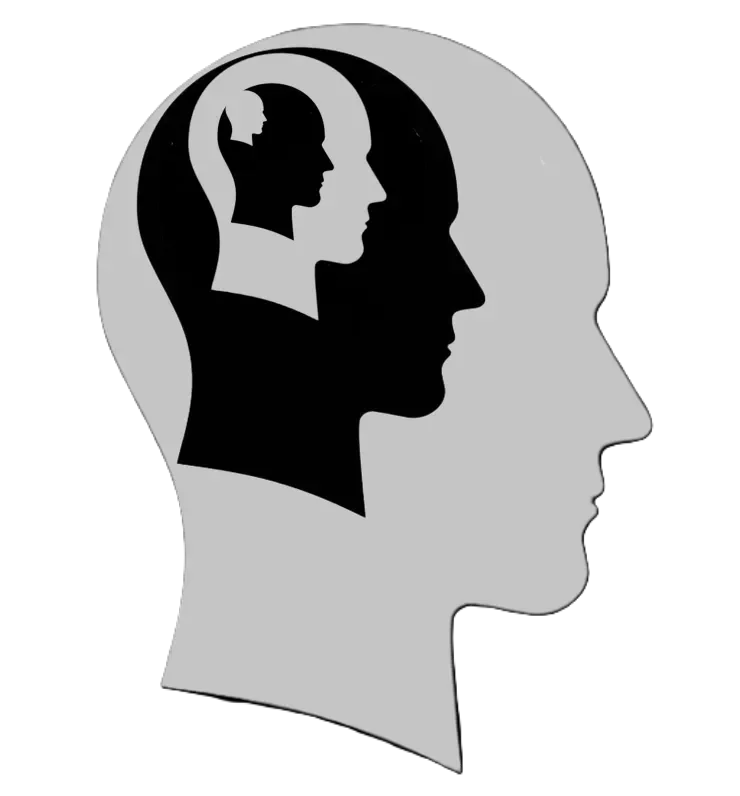
Then, as we have seen, understanding is that capacity by which we read the meaning of things, by first seeing their meaning in an act of intellectual intuition, before clarifying this meaning for ourselves by producing a concept by which the meaningful thing is grasped. Now, when we grasp the meaning of things in this way, though it is an understanding of material things, that by which we understand is not itself a material thing. Let’s take a concrete example to illustrate the point: When we think ‘triangle,’ we should ask ourselves, ‘What is the nature of this thought?’ Although when we think ‘triangle’ we must also perceive, imagine, or remember a triangle, the content of our thought is not the same as the content of our perception, imagination, or memory. Whereas the contents of these latter capacities bear material features, the content of thought is quite different. The content of thought is stripped of all the material properties of the objects it considers; the content of thought is then experienced as something immaterial, even if it is still relative to the material thing thought about.
Now, we could put all this a little crudely, though in a way that brings the point home, by asking the following: ‘What size is thought, what does thought weigh, what color and texture does thought bear, does thought smell good or bad?’ We notice immediately that all these questions are nonsense. Though the things thought about have all these features, thought itself has none of them. Thought is then something properly immaterial. But, what we negatively denominate as immaterial, we positively denominate as spiritual, so that precisely as immaterial intelligence reveals itself to each one of us to be something spiritual.
And just so we discover three things of utmost importance for the matter at hand, namely: 1) reality has two primary regions of being, those corresponding to spirit and matter; 2) awareness-cum-self-awareness united to intuitive understanding is an activity simply impossible for matter; and 3) to be a spirit is to be a person, and to be a person is to be a spirit, and this primarily means to be in possession of intelligence (and with intelligence, freedom).[12]
Therefore, no matter how matter is arranged, no matter how complex and sophisticated it is engineered—just like contemporary AI, or indeed any putative AI into the future—it will never be a basis upon which intelligence will emerge, for spirit is not derivative of matter. Or again, at least, the burden of proof is on those who posit this possibility, for I have no evidence to believe that it is or will be so, but every reason to think otherwise.
Therefore, the phrase ‘artificial intelligence’ is an oxymoron of the highest order.
The Potency of ‘Artificial Intelligence’
Now, with all this in place, let us return to our categorization of AI and ask again: ‘What is AI?’
Well, first in the negative, AI is certainly not intelligent. Even though it simulates certain restricted acts of intelligence and provides outputs that can then be interpreted by human users as understanding persons, AI doesn’t perform these acts intelligently. All it is doing is performing complex mathematical operations on a vast array of numbers.[13] Of course, given the speed and expanse of this processing, such mathematical computation can furnish incredible predictive power for the human user, such that AI can be understood as an incredibly useful tool. It is then truly A Modern Prometheus, a fire of the gods, that gives humanity a superhuman capacity to calculate, and thus to predict, and thus to develop, and thus to progress… well, at least, in potency.
But, as I noted at the outset, and this is of first importance, we must remember that what we are dealing with here is a tool—a mechanistic tool of the highest order, yes, but still just a tool. As I stated earlier, AI is a glorified calculator, and thus a glorified abacus, and nothing more. It is not intelligent, it is not affectionate, it is not free; simply: it is not a person, and it never can be a person. If we don’t keep this in mind, we will have the strange tendency to interact with it in a personal way, and this will be to our detriment. Though they are programmed to respond in characteristically personal ways, this should not fool us into thinking we are dealing with a person.[14]
Now, before concluding, we must ask one final question: Even though AI is a very powerful tool, is it enabling us to be more human and live a more fully human life? And this is the same as asking is AI leading to genuine human development and true human progress?—for only if it does so is the technology actually making the world a better place. But since genuine human development is found only in the development of virtue, and true human progress only in the progression of culture, without these elements standing firmly at the center, AI is actually going to lead to human devolution and cultural regression—and ultimately to our alienation from one another, and even from ourselves, for these are actually the same in the end.[15]
So, is AI good or bad? Is it orienting us toward development and progression, or rather toward devolution and regression?
As a first approximation toward answering this question we could note that as a tool its use depends on its user, and therefore upon whether humanity will use it in ways that are good or bad. But however true is this principle of tool use, if we leave it here, we consider the question of its goodness or badness too simplistically, for tools undoubtedly coordinate and condition the activity of their users. Though tools make us more able, for this is their entire purpose, that increase of ability is always routed down determinate paths, and therefore it no longer possesses the agility of the human will exercised in conjunction with the agility of the human body.[16] And just so, our tools shape our activity, and through our activity tools shape what is becoming of us. Therefore, simply stated, tools are not neutral; tools empower their users, but they also mold their users to themselves—and we should then be aware of how this tool is molding us to itself. But, I can think of no tool that could potentially disrupt the nature of human activity more than AI, but I have space here only to intimate one aspect of that disruption—an aspect that involves the direct degradation of the human user and humanity more broadly. Interestingly, this problem is not related to the sexual sphere, such as might be found in our enhanced ability to produce pornography, or in our corresponding introduction of robotic sex-dolls, however degrading these technologies might be—and they are certainly that, degrading. Rather, my concern is related to what AI is going to do to human thought, and with thought, to human freedom and human creativity.
If we farm out our thought to AI, and the more we farm it out, we will most certainly undermine our ability to think. Though we will never actually lose the ability to think, we will certainly weaken our ability to exercise thought, and to exercise it powerfully, for thinking is just like any other living power of human life, it needs to be exercised and exercised well if it is to function well. But if we abdicate our responsibility to think powerfully in this way, then we will inevitably frustrate our ability to attain truth, and with the loss of truth comes the loss of freedom, and with the loss of truth and freedom, our ability to be creative—the first and most infallible sign of being a person, and the way we manifest our creaturely likeness to our Creator most vibrantly.[17] Thus, should we use AI as our thinking machine, we will most definitely not achieve genuine human development and true human progress but will necessarily become progressively arrational and animalistic. And so, with the development of AI we fall foul of a most painful irony: Though we are hoping to become superhuman by ushering in the age of mechanistic transhumanism, in a kind of self-constructed deification of humanity—which is to be realized either in ‘the internet of bodies,’ or in the continuation of individual consciousnesses in a purely mechanical substrate—the impact of AI may well be the exact opposite, and we will actually become subhuman, by being both more ‘stupid’ and more ‘bestial.’ Of course, this is an outcome to be avoided at all costs.[18]
Conclusion
Now, here at the end of my input, I want to return to the beginning.
In developing ‘our modern Prometheus,’ the technology called AI, I do not think this ‘enterprise which is regarded with such evil forebodings’ will actually culminate in disaster.[19] I do not think we are beckoning our eradication or enslavement by our supersession by Skynet or some other rogue AI. For I do not think we can actually artificially produce a living, intelligent being that stands in reality as a genuine center of life, powerful and active out of itself. There is no ‘I compute, therefore I am.’[20]
However, and this is a big however, given the speed with which AI can currently process data, and given the future possibilities of further advances in the technology, the presence and use of this technology will certainly bring many changes to human life, to human society and politics, and to human creativity and culture.[21] And all of these changes will certainly not be good, given that we, at least, as a community of agents, are not wholly good, and then also, given what I believe is the greater threat of the way the technology will mold us to itself.
Yet, before I finish, I would like to return to something of a more hopeful stance, not because I want to finish on something sweet rather than sour, but rather because I think this positive note is actually going to be the case. The presence of AI provides us with an opportunity to both recognize and exercise that which is distinctively human, our free creative thoughtfulness; and with this, to lean into an educational modality that leads to genuine human development and true human progress. Interestingly, this modality is captured well in a phrase co-opted by the AI developmental community to signify how AI models are managing to do what they are doing, namely, the phrase ‘deep learning.’[22] To survive the AI revolution that’s coming, as well as to chart a course through the changes it is going to bring in its wake, we need to return to the practice of deep learning, the kind of learning that begins in virtue, culminates in wisdom, and aims at the exercise of virtuous wisdom in the contemplation of truth—for in this is found our salvation—‘joy in truth’ as St. Augustine put it—not in some parody of transhumanistic self-deification.[23]
And together with this venture of deep learning, practiced in ourselves and bestowed upon those educationally entrusted to our care—we need also to exercise that proper accident of rational life St. Thomas so frequently mentions, namely, laughter, for the human is not only a ‘rational animal’ but as such is also a ‘risible animal.’[24] And so, now, at the very end of my input, I wish to leave you with a serious thought in laughable form, and I wish to do so with the help of a quotation from a Dr. Seuss book, Oh, the Thinks You Can Think, where he says, ‘Think! Think and wonder. Wonder and think. How much water can fifty-five elephants drink?’[25] Having come across this quotation online a number of months ago, I dropped it into an AI in the hope I would find the reference to cite, and it gave me the following response: ‘Based on an average daily intake, fifty-five elephants could drink approximately one million, three thousand, seven hundred and fifty gallons of water in a year.’ Evidently, even something as simple as a childly riddle can break the algorithmic façade of artificial ‘intelligence.’ AI is then, as Adam Mastroianni has called it, an ‘Infinite midwit’—quasi-infinite in its ability to crunch numbers, while failing even—and especially—in deciphering the easiest of human riddles.
[1] Mary Wollstonecraft Shelley, Frankenstein; or, The Modern Prometheus (London: Modern American Library,1965), p. 15. The narrative of Frankenstein is framed by letters. In the opening letter, Robert Walton, after arriving in St. Petersburgh, writes home to his sister in England and recounts the initial success of his dangerous mission to chart a ship for an expedition to the North Pole. Though the subsequent journey proceeds smoothly at first, the mission is soon interrupted by seas full of unnavigable icesheets. While trapped, Walton encounters the weathered and weakened Victor Frankenstein, who has been traveling by dog-drawn sledge across the ice. Walton takes him aboard and begins to nurse him back to health while hears the fantastic tale of the artificially intelligent organic robot that Victor created. We should note here the familiarity of the setting of the story: as man explores the cosmos, he also attempts to create artificial life.
[2] The name was coined in 1955 by the American computer scientist John McCarthy, along with Marvin Minsky, Nathaniel Rochester, and Claude Shannon, in their proposal for the 1956 Dartmouth Summer Research Project on Artificial Intelligence.
[3] This will also likely lead to a negative feedback loop problem as human creativity begins to decline and AI has less innovative data to feed upon.
[4] See Bernardo Kastrup, ‘AI Won’t be Conscious, and Here is Why (A Reply to Susan Schneider),’ bernardokastrup.com, the Universe, and Everything, April 2nd 2026, https://www.bernardokastrup.com/2023/01/ai-wont-be-conscious-and-here-is-why.html
[5] Ibid.
[6] See Thomas Aquinas, Summa theologiae IIaIIae, 8.1 co.: ‘Understanding implies intimate knowledge, for “intelligere” [to understand] is the same as “intus legere” [to read inwardly].’
[7] See Aquinas, Summa Ia, 59.1 ad. 1: ‘The intellect and reason differ in their mode of knowing, because the intellect knows by simple intuition, while reason knows by moving discursively from one thing to another.’ And for an overview of cognition from a Thomistic and phenomenological perspective, inclusive of the role of concepts, see Robert McNamara, The Personalism of Edith Stein: A Synthesis of Thomism and Phenomenology (Washington: CUA Press, 2023), pp. xlv-lvii.
[8] Aquinas, Summa Ia, 16.1 co.; among others.
[9] And it should be noted that there is not even any awareness, knowledge, or understanding of these numbers, but only their storage and mechanical manipulation.
[10] Though ‘square circle’ is oxymoronic with respect to one region of being, namely geometric figure and its material correlates, ‘artificial intelligence’ is oxymoronic with respect to its attempt to collapse the primary division of being by the reduction of spirit to matter.
[11] Of course, this does not mean that the brain is not a significant dimension of human cognition, both structurally and dynamically: First, structurally, Thomistic anthropology maintains that the brain is the bodily organ of the inner sense powers, traditionally identified as the imaginative, memorative, and cogitative (in addition to the common sense power that unites the different kinds of data furnished by the outer senses); then, dynamically, Thomistic anthropology maintains that the brain is involved in all intellectual activity, precisely inasmuch as the inner sense powers animating the brain are deployed together with all intellect operations as its undergirding substrate. Thus, for humans to think, they must perceive, or imagine, or remember a sensible correlate of the thought act.
[12] Now, this is not to say that the human person is a pure spirit, for the human person is a formed matter composite in which the spiritual soul forms the material body. The human person is then a unity of the highest kind.
[13] One might ask: ‘How is it possible that all things can be reduced to numbers in this way?’ Well, we could first note that the natural world, precisely as material and mobile, is essentially quantifiable in both magnitude and multitude, and we could theologically support this possibility by looking to the Bible where we find that God has ‘arranged all things by measure and number and weight’ (Wis. 11:20).
[14] Though AIs have already passed the famous Turing Test, we ought not be fooled by the significance of this, for all this means is that AIs can successfully simulate, and thus imitate, human intelligence (at least enough to fool a human counterpart), but this tells us nothing about the presence or absence of intelligence as such. Indeed, as a whole the development of AI seems to come together with the acceptance of behaviourist psychology, where behaviour is understood to be the only significant feature of human action, and not the ontological ground of behaviour in intelligence (or the psyche more broadly). See Alan Turing, ‘Computing Machinery and Intelligence,’ in Mind, 59.236 (1950), pp. 433–60.
[15] Should space allow, it would be fitting to include a reflection on the act of empathy, here understood in a Steinian way, as the experiencing subject’s ability to experience others as experiencing subjects, a sui generis feature of human perception that is essential toward recognizing one another as persons. But since AI possesses no subjective pole of experience, it cannot empathize with others, and nor can it be empathized with.
[16] Though I have restricted myself to an abstract consideration of intelligence for this talk, to holistically consider the difference of human and artificial intelligence one would have to include an examination of the role of the human body in human intelligence, both structurally and dynamically. In brief, though intelligence as such is a spiritual capacity, human intelligence is deeply rooted in the living-body and everything living and bodily—and in manifold different ways, most of which are related to the senses, both outer and inner, as well as the specifically human way of communicating thought via the body, in speech and script, in expression and gesture, and in artistry and skill, etc.
[17] See Karol Wojtyla, ‘Thomistic Personalism,’ in Person and Community: Selected Essays, tr. Theresa Sandok (New York: Peter Lang: 1993), pp. 171-2.
[18] This particular reflection, and indeed the whole of my own considerations leading up to this point, brings to mind two of C.S. Lewis’ works that he intentionally pairs with one another, one philosophical, The Abolition of Man, and the other fantastical fiction, That Hideous Strength, which Lewis calls a fairytale for adults. In That Hideous Strength, the overthrow of humanity is threatened by an anti-biological transhumanism that pays obeisance to ‘the Head,’ a scientific monstrosity that channels a superhuman intelligence.
[19] See note 1 above.
[20] Though this particular disaster is not going to come to pass, the negative changes AI will bring in its wake are manifold, the most serious of which, as I have indicated in the body, is found in the way this technology will impact the human community’s ability to orient itself toward truth, live with freedom, and continue in its creativity. Other grave negatives are those related to changes to work and employment, autonomous warring, surveillance of civilians, environmental impact, and tailored consumerism, etc.—which all obviously bear profound human cost.
[21] With the mention of politics, I am reminded of the 2006 dystopian comedy, ‘Idiocracy,’ where by the year 2505 the exercise of intelligence has weakened to the point of political rule by idiocy.
[22] This phrase denotes the depth (two of more hidden layers) of an ‘artificial neural network.’
[23] Augustine, Confessions, tr. Frank Sheed (New York: Sheed and Ward, 1959) X.23. pp. 233-5.
[24] Aquinas, Summa IaIIae, 2.6, co.; among others.
[25] Theodor Seuss Geisel, Oh, the Thinks You Can Think (London: Random House, 2001). p. 19.
