Aquinas versus Camus
An Existential Antidote to Modern Absurdity
A talk I recently delivered (March 26th 2026) for the Philosophical Society at Maynooth University, Ireland, where I critiqued the absurdism of Albert Camus what the medieval existentialism of Thomas Aquinas.
‘Nothing to be done.’[1]
These are the words of Estragon of Samuel Beckett’s play Waiting for Godot—the opening lines of a work of the genre aptly called ‘Theatre of the Absurd.’[2] Writing in post-war France, Beckett was moving in the same intellectual milieu as Albert Camus, the French Algerian progenitor of ‘Absurdism,’ a philosophy that grants and embraces the apparent absurdity of life. In what is probably his best-known philosophical work, The Myth of Sisyphus, Camus formulates his philosophy in the following way:
Man stands face to face with the irrational. He feels within himself his own longing for happiness and for reason. The absurd is born of this confrontation between human need and the unreasonable silence of the world.[3]
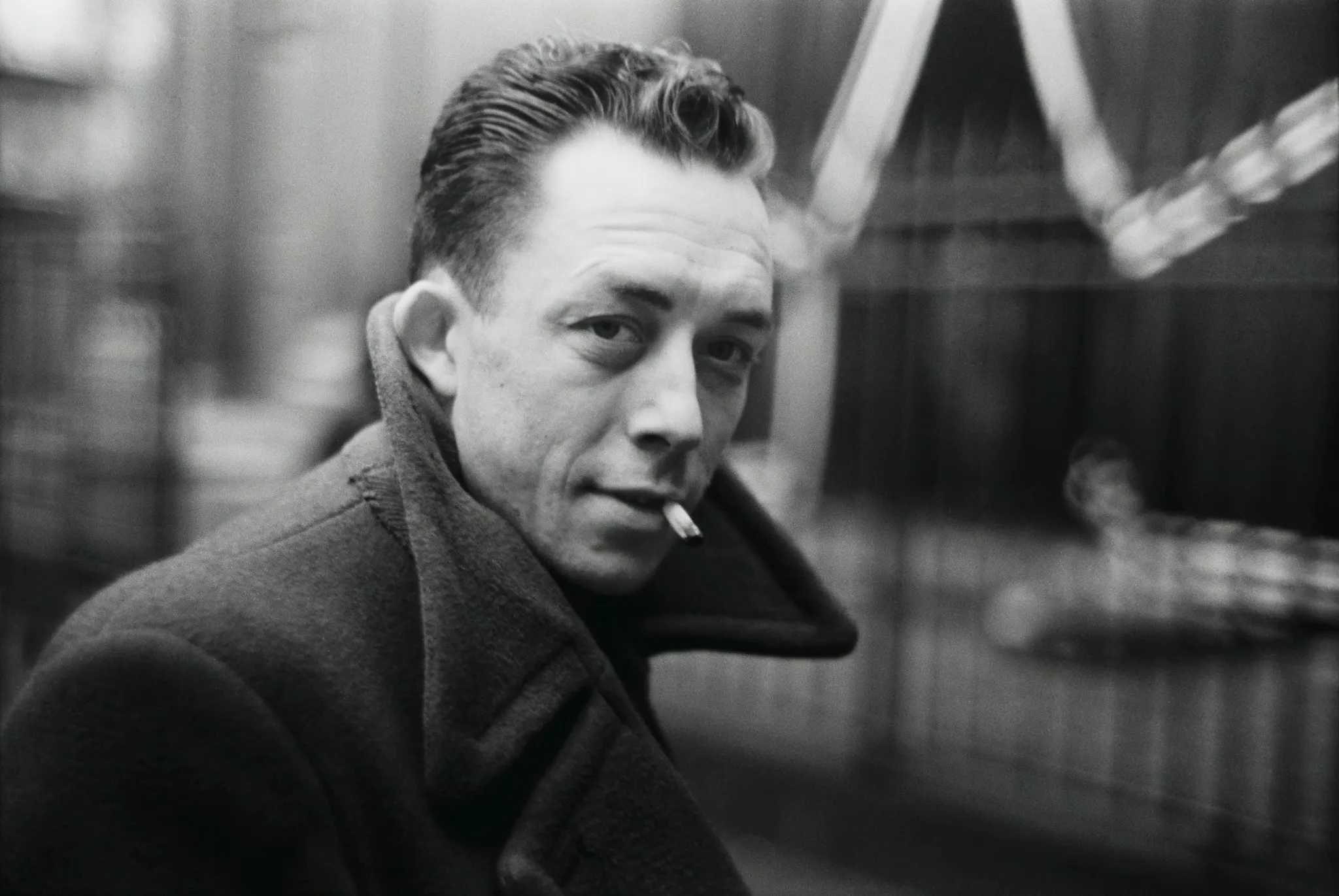
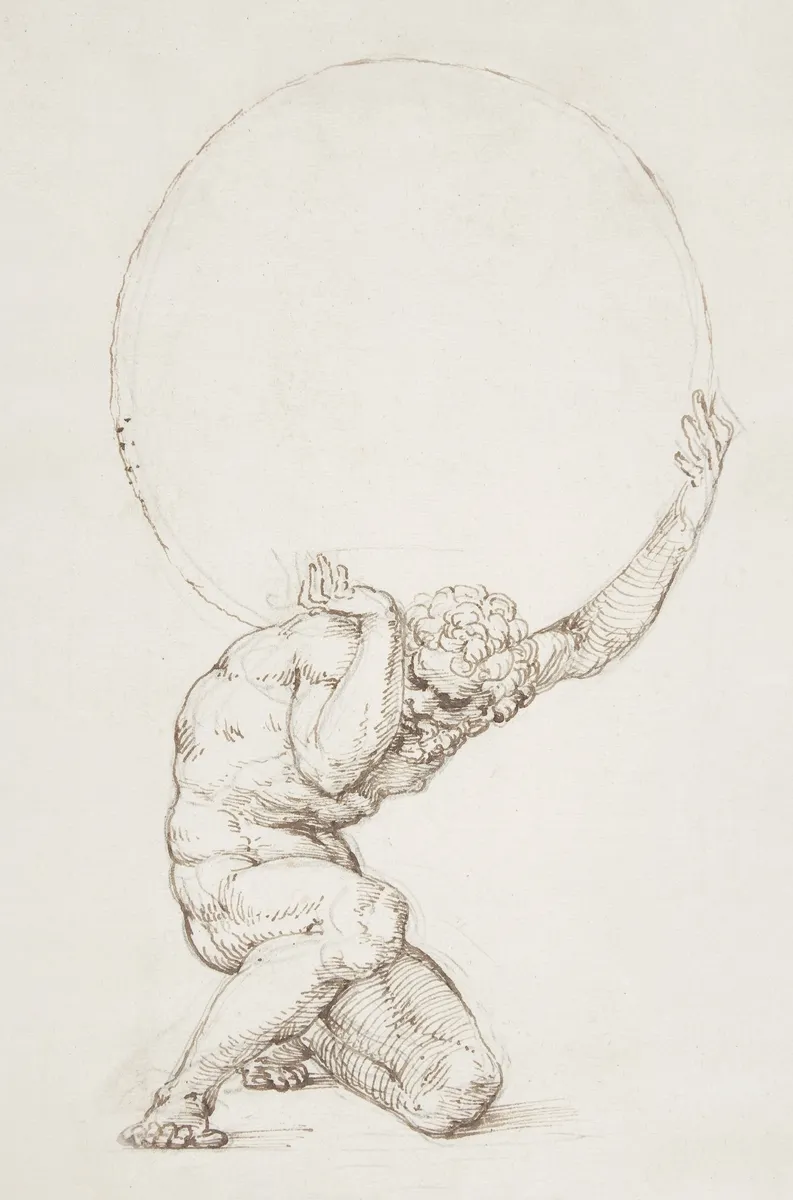
To adopt Camus’ proposition is to assume the existential attitude of ‘lucid awareness of the absurd,’ an attitude he suggests is ‘the only possible attitude’ in the face of the deepest desires of the human heart in a world without purpose.[4] For Camus each of us are no better than the mythical Sisyphus of ancient Greece, pushing our rocks back up the very same hill, only for them to roll right back down again, day-by-day, ad infinitum, as we wait for something, for anything—for some harbinger of hope to appear over the horizon and make sense of our lives—to grant us ‘life, eternal life,’ for, following Augustine, this is exactly what Camus recognizes to be the deepest desire of the human heart.[5] But, as the messenger boy of Beckett’s play repeats, ‘Mr. Godot told me to tell you he won’t come this evening, but surely tomorrow.’[6] And so, we wait, and we wait, and we wait… but with a question preying upon our minds, ‘What are we to do as we look toward the nothing of death to close in upon us?’
Faced with this question, Camus proposes we have the potential to pursue one of three possible courses of action, that of actual suicide, in taking one’s bodily life, that of philosophical suicide, in choosing to make a blind leap of faith, whether in God or in some ideology, or, the one Camus’ commends, that of heroic defiance, in an act of impassioned revolt—and with lucid awareness of the deafening silence of reality, we then make meaning out of our very selves.
This afternoon, I’m going to suggest that the attitudes proffered by Camus are not our only options, but that there is an alternate way to live our lives with the raw authenticity Camus rightly exhorts. This is the way provided by the existentialism of the late medieval thinker, Thomas Aquinas, an existentialism that is at one and the same time an essentialism, and thus a way that circumnavigates the blind avenues of absurdism, as well as the various other existentialisms of post-war Europe—whether they be nihilistic existentialism of Sartre or the unconditioned existentialism of Heidegger.
Now, to be clear as to my method, I am not going to argue against the position of Camus (or Sartre, or Heidegger)… or for the position of Aquinas. That would be a pointless venture, because Camus and his philosophical cousins on one side, and Aquinas and his confreres on the other, diverge over something much more fundamental than that which can be established by demonstration. They disagree over the premises of all demonstration, for they disagree over what they see and hear, and no argument is going to prove or disprove this kind of disagreement. Therefore, today I’m going to present their mutually exclusive perspectives, and invite you to look and see, listen and hear, and judge for yourself which one, if any, is actually sound, and a basis upon which you can live your life—and I mean this latter clause in a technical sense, a basis upon which one can actually live life.
The Absurd
So, let us first begin with a brief expansion of Camus’ already noted position. [Let us, so to speak, give the Devil his due.] As indicated in my opening, Camus claims that the absurd is born of the encounter of human reason and a meaningless world. As rational, the human being searches for meaning as he navigates the world, both theoretically and practically—and this attempted navigation is coincident with his desire for happiness—but he is met with the deafening ‘silence’ of a world devoid of purpose. As reason seeks reasons, meaning alludes its grasp. This is the grounding nihilism of Camus’ absurdism. But what then are we to do? As beings determined by reason, as beings in need of reasons, purposes, and aims, as beings in need of the fulfillment of happiness, what are we to do?
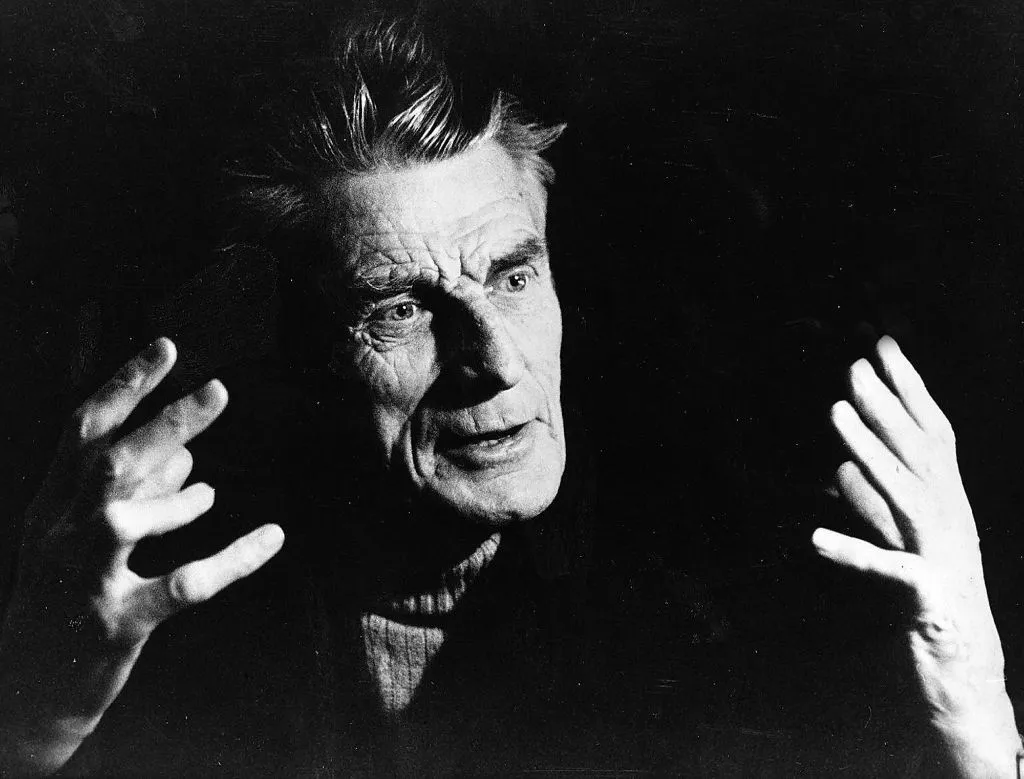
Beckett’s Estragon and Vladimir choose to put off the question for another day, and then another, and then another, doing nothing in a world where nothing meaningful happens. Camus’ Meursault of The Stranger, and his differentiated protagonists of The Plague, chose to face the apparent meaninglessness of the world, not with the apathy of Beckett’s characters, but with a fighting attitude. Camus’ characters act against the meaningless world in various forms of revolt, acting against morality and convention, acting against suffering and death. In this way, they can be imagined happy as they forge the meaning of their lives out of themselves. Thus, from the characters of these absurdist narratives, we can discern the various attitudinal dispositions possible for the human who comes to embrace the nihilism of reality. This is most likely why Camus chose to propose his philosophy mostly via the form of narrative, for such a philosophy of absurdism does not readily admit of being reasoned through, for how can one reason rightly about that which is actually absurd. What arises from these narratives are the various stances proffered by Camus: We can either embrace the silence of the world in plain nihilism, in consequence of which we cease to live, either actually, with suicide, or philosophically, with faith, or we can embrace the very absurdity of being rational in an arrational or irrational world, acting against its deafening silence in passionate defiance—in consequence of which we become our own creators. Or, in everyday parlance: ‘you do you, and I will do me’… but in the end, it doesn’t really matter, for there is not ultimate ground supporting the structure in any way.
This, in summary, is the absurdism of Camus, and it is a doctrine that I will receive with due seriousness, by taking Camus at his word, and calling his position ‘absurd’—but now in a decidedly negative sense.
To be absurd—and this is its proper meaning—is to be out of harmony with reason. To be absurd is to be illogical: opposed to reason, or allogical: without reason. This contemporary use of the word flows from its more primitive sense, where it means to be unhearing or deaf, and also, in consequence, to be unspeaking or mute, and thus, in effect, to be shrouded in silence, and, at one and the same time, out of tune. Indeed, this is precisely why Camus alights upon the silence of the world as the foundation of absurdism; and it is why he proposes the impassioned rebellion of singing one’s own tune to be the most fitting response to the barren world in which he finds himself.
The world is meaningless because it does not speaktous meaningfully, and the world is meaningless because it does not listen for or hearour own meaningful speech, whether in word or action.
The nothingness of this meaninglessness is then the founding reason for assuming a philosophy of ‘nihilism’; and this nothingness of meaningin anexistentworld is the reason for assuming ‘existentialism’ as one’s philosophical attitude; and the combination of these two attitudinal assumptions, when embraced with honesty and authenticity, is the very reason for the embrace of ‘absurdism.’
For we must, by absurd necessity, if we are not to end it all in actual or philosophical suicide, sing our own tune—defiantly, in the face of a toneless world, and in full awareness of this tonelessness.
Questioning Camus
Now, though I admire Camus’ consistency, plainly meeting the theoretical and practical costs of nihilism without falling into its suicidal vortex, whether actually or philosophically, I do not think he saves nihilism from its terrifying consequences—for I do not think the nihilist premise upon which the whole edifice is built possesses any coherence whatsoever. As a result, I do not think the absurdist position of Camus actually possesses any real possibility of consistency in thought or action; and that is to say that I don’t think it can actually be lived out with consistency—but note: I here say ‘consistency,’ not ‘coherency,’ for coherence is not to be expected of anything properly absurd.
Therefore, instead of arguing against absurdism, which, as I mentioned already, is technically impossible, I’m going to approach it all from another perspective, the most basic of intellectual perspectives, that of intellectual intuition. Intellectual intuition is, so to speak, the very seeing and hearing of the intellect, and it is only from this perspective that Camus’ proposition can be assessed. From this vantage point, I am going to pose a simple question of Camus’ position, and that is: Should I grant Camus’ first premise? Should I grant that when I look to the world, when we see and hear what is to be seen and heard, do I find the world to be silent? When I look to the depth of the world, do I in fact see and hear nothing?
This then will be the foundation of my ‘argument’ against absurdism: Look so that you may see, listen so that you may hear. This methodological choice closely follows a little dictum of Aristotle, when he says, ‘to prove what is obvious by what is not is the mark of a man unable to distinguish what is self-evident from what is not.’[7] And I propose that the world, rightly interpreted, is self-evidently meaningful. Therefore, the task of my paper is going to be one of exposition, during which I will detail an alternate interpretation of experience—an alternate provided (as today’s title indicates) by Thomas Aquinas (one of the great medieval interpreter of Aristotle). This is why the title of today’s paper is ‘Aquinas versus Camus,’ not because I am going to perform an intellectual smack-down of Camus (much like such YouTube tropes as ‘Aquinas “destroys / humiliates / schools” Camus with facts over feelings’) but for a more prosaic technical reason, that the doctrine of Aquinas will be set opposite the doctrine of Camus, as a plain and simple confrontation of positions that differ so much from one another that there really is no common ground.
Aquinas’ Worldview
So, what I will now do is sketch what Aquinas sees and hears when he encounters the world, yet not merely as his imposing system is presented in its late medieval form, but rather as one might render it in a modern existentialist way—and thus, in a way that responds to the contemporary interest in existentialism, both philosophical and cultural. Truly, there is good reason why existentialism rose to prominence in the modern era, where it has gripped not only the philosophically engaged but also the everyday ordinary person, permeating contemporary culture to a profound degree. Through its presence we have come to realize with great clarity just how significant is the singular person and the concrete course of human life, and just how crucial it is that we determine our own lives with authenticity, while taking responsibility for what becomes of us.
All this is truly insightful, and readily to be affirmed; yet, in most forms of contemporary existentialism, this array of truths come together with a decidedly nihilistic grounding—a grounding we have seen in the absurdism of Camus, and which , I argue, actually makes contemporary existentialism unintelligible—and rightly called ‘absurd.’
By presenting a Thomistic worldview as my existentialist ground, I’m going to attempt to show how this array of modern insights can be grounded in its theoretical framework. And, having done this, I will then return to our question: When I turn to the world with our rational hope for ultimate fulfilment, do we in fact see and hear nothing? And then, more poignantly, is my action meaningless apart from the meaning that I impose upon it? Or, in a word, is my life absurd?
So, let us begin just like we did with Camus, with a brief overview of Aquinas’ position.
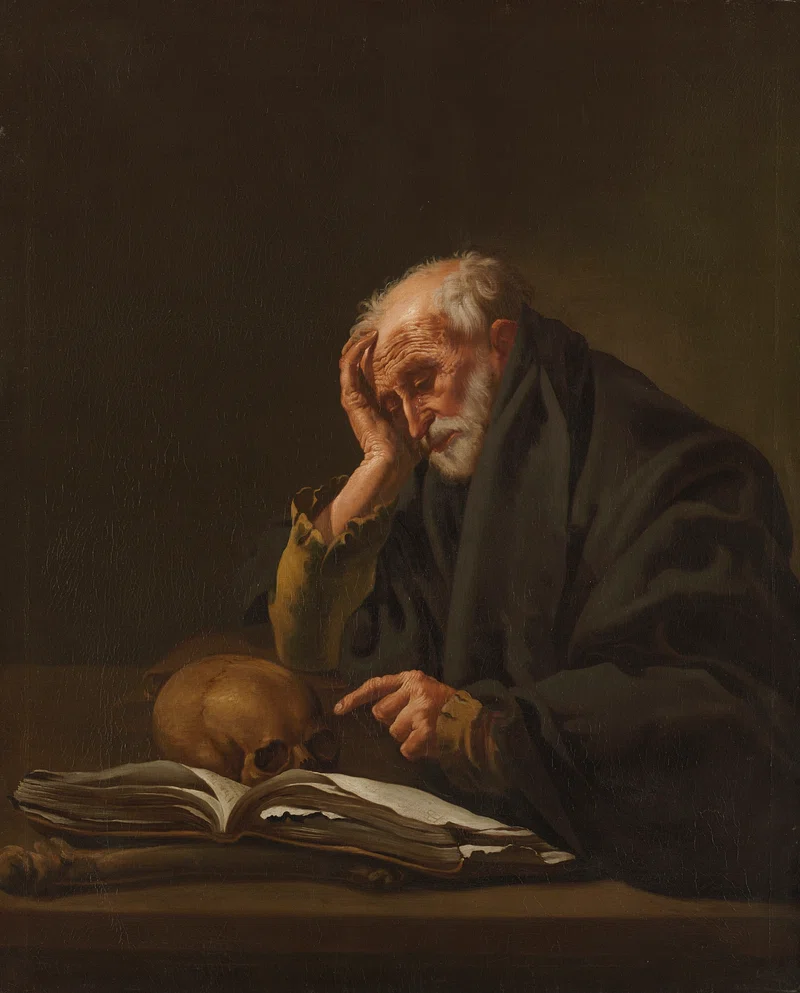
For Aquinas, everything we experience, and indeed, everything we can experience, is both intelligible and desirable. As intelligible, each thing can be known and understood; as desirable, each thing can be chosen and loved. This, for Aquinas, is the truth and goodness of reality, this is its meaningfulness, and this meaningfulness has valence for beings with mind: for the human being. The ultimate metaphysical ground of this intelligibility and goodness, for Aquinas, is being (esse), which Aquinas describes as ‘the actuality of all acts, and, therefore, the perfection of all perfections.’[8] That which is first actualized by being is essence (essentia), so that all existent things are a composition of being and essence. As used by Cicero, and the Latins thereafter, essence (essentia) literally means the ‘beingness’ of beings: the dogginess of dogs, the catness of cats, and the humanness of humans. Whereas being actualizes the thing, essence determines ‘what’ it is, so that each thing is identifiable as the kind of thing it is, while also being powerfully in the world with its own teleological oriented activity—toward its own perfection and that of the cosmic whole. Thus, every actual thing, every existent, is a composite of being (esse) and essence (essentia), where essence qualifies being by determining it in this or that way, so that a thing of a particular kind stands in existence. And just so, for Aquinas, the natural world is meaningful, both in its existence and in its activity.
Now, upon the basis of this interpretation—the being, essential constitution, and teleology of existence—we come to see that the world has a first ground and final end beyond itself. Since the immanent meaningfulness of the world is not comprehensible in itself—either in being, essence, or activity—a rational account of its meaningfulness can come only from turning to the transcendent. Otherwise stated, turning to the transcendent is necessary if we are to account for the immanent meaningfulness of reality, an imminent meaningfulness that is patent in every experience whatsoever—in every moment, in every way. The transcendent is then revealed to us in and through the immanent, and it is revealed as ‘being itself,’ ‘essence itself,’ and ‘activity itself.’ And it is precisely as such that the transcendent accounts for the being, essentiality, and activity of the world, for the transcendent, and only the transcendent, is the ground of its own being, essence, and activity. The transcendent is, so to speak, the ground of grounds, and therefore the ultimate explanation of everything else in need of grounding. The world is then meaningful for us because it is grounded in meaning itself; reasonable because it is grounded in reason itself; and logical because it is, in a word, grounded in Logos—the Word, or the Reason, or the Meaning of reality. This insight was first introduced by Heraclitus in Ancient Ephesus when he says, ‘The logos holds always’; and again, ‘the logos is common’; and finally, ‘all things come to be in accordance with the logos.’[9] And just so we see that for Aquinas the world is meaningful through and through, both in itself and in its origin and end.
Now, with Aquinas’ doctrine in before us in its brevity, we can proceed with our existential consideration of its content, for it is only with this that we will see and hear why all this matters… existentially, personally.
Existential Thomism versus Contemporary Existentialism
A fundamental assertion of contemporary existentialism is found in the axiom, ‘existence precedes essence,’ initially proposed by Jean Paul Sartre in his Existentialism Is a Humanism, but which likely traces its ideational origin into the thought of Martin Heidegger, when in Being and Time he says, ‘the ‘essence’ of Dasein [our being-there] lies in its existence.’[10] Much of contemporary thought and culture, and much of what happens in society and politics, is determined by this very principle, so widespread has been its impact in the last eighty or so years since its first proposition. Though many, perhaps most, who live by this principle have not read Sartre, or Heidegger, the principle nonetheless determines their lives. Considering this principle from the perspective of Absurdism, we can say that should you come to grant the meaningless of an existence robbed of essence, and then attempt to respond as Camus commends, by rebellion, you cannot but place priority on existence overagainst essence—for in a world devoid of essence, the individual can do nothing but forge life entirely out of himself. That is, unless he assumes the moribund avoidance of Beckett’s protagonists, who then aren’t even protagonists anymore.
But let us not grant the nihilist first premise that underwrites absurdism, while yet saving the insight inwardly determining existentialism. Therefore, let us employ Aquinas’ framework as our key toward interpreting this very existential axiom. And let us state the case most simply at first: For Aquinas, as we have seen, being precedes essence, and existence succeeds both being and essence. And with this we have our first distinction of significance, a distinction that is indeed of first significance—both in itself, and for the matter at hand—for it is a distinction that allows us to prioritize being while at one and the same time recognizing the way essence precedes existence. Though the terms being and existence appear so closely related in most contexts that they are often used as substitutes for one another, according to their Thomistic meaning, ‘being’ signifies the undergirding principle that actualizes everything real, whereas ‘existence’—from the Latin ‘ex-sistere’—signifies the way the things so actualized as real ‘stands forth’ in the world—that is, with presence, power, and action.
To say the least, then, the metaphysical principle Aquinas calls being (esse) makes all the difference in the world, for it represents the difference between something and nothing—between some-thing and no-thing. Whereas non-being is completely without reality, and is inert in the strongest possible sense, having no presence, power, or action, the existent that has received being is actuality and dynamism together, interconnected and interrelational, possessing presence, power, and action in one. There is therefore no greater difference than the difference separating being from non-being, with a great chasm dividing being from non-being, a gulf that is well captured by the pithy formulation of Shakespeare’s Hamlet. Though Shakespeare was likely not riffing on Thomistic metaphysics when he places ‘that’ question on the lips of Hamlet: ‘to be or not to be, that is the question,’ he does in effect bring us right to the heart of Thomistic metaphysics—and he does so, just like Aquinas, by considering being in its infinitive form, namely, ‘to be’ or ‘not to be.’[11] Now, this is indeed the question, the question of all questions. It is a question with the greatest possible existential import, for it is through being that existent things come to be, whatever kind of things they may be—including the human being—and then, and only then, be present in the world, standing forth power and action. Evidently then, the existence of things—of each singular thing, and of all things together—bears significance for Aquinas, for through their variegated essential constitution, they ‘witness’ to the meaning of being—where each thing witnesses both to itself and to its Creator.
Existence then evidently matters for Aquinas; existence means something; in fact, it means everything.
But we must journey still deeper.
Just like Hamlet, and just as proposed by the various strands of contemporary thought already mentioned, in one way by Heidegger, in another by Camus, we can reflect that it is perhaps only from the perspective of death that we can take hold of the existential weight of being. Alive, and living our lives in the face of the horizon of death, the significance of existence leaps into the foreground as something of ultimate value—and indeed that value without which nothing else can be valued. This is perhaps no more forcefully set forth than in the thought of Camus himself, who opens his work, The Myth of Sisyphus, with the following pointed line: ‘There is but one truly serious philosophical problem, and that is suicide. Judging whether life is or is not worth living amounts to answering the fundamental question of philosophy.’[12] This is the very same insight of Hamlet, though formulated in view of the ultimate negative, that of taking one’s own life. Aquinas would perhaps formulate it the very same insight in the following way: ‘There is but one truly serious philosophical question, and that is being. Judging whether being is or is not worthy of our delight amounts to answering the fundamental question of philosophy.’
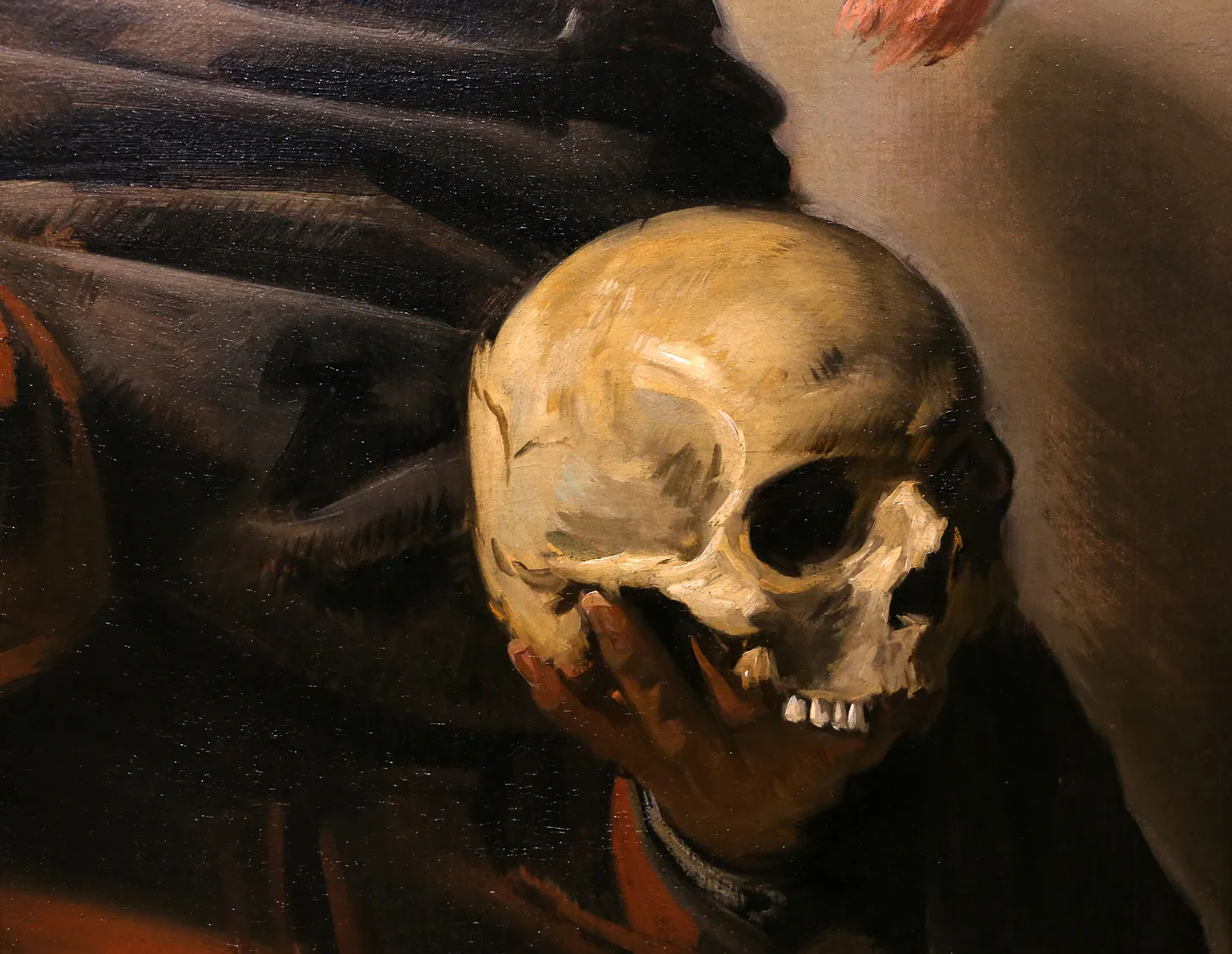
For Aquinas, the answer is a resounding yes; in fact, the whole of his philosophy can be assessed as answering this one question in the affirmative, even though his answer will then also bear all the multiplicity and complexity of an adequate human response to the multiplicity and complexity of the essential constitution of reality.
Now, for Aquinas, to exist as a person is special, for to be a being that bears a rational and free essence entails an exalted mode of life. Indeed, this is given in the very significance of the term ‘person,’ which has been historically crafted to ‘signify that which is most perfect in all of nature.’[13] Aquinas contends that the essential reason for this perfection is the freedom of the person, for, as he says, ‘in a more special and perfect way, the particular and individual is found among rational substances [that is, persons], who have dominion over their own actions.’[14] This dominion makes persons special as individuals, and it is by wielding this dominion that persons learn to express their very existence, day by day, choice by choice. Unlike the other beings of the natural world, which act out of their natures and only out of their natures (each thing according to its kind), the human being acts not only out of its own nature, but also out of him or herself as an individual. My actions are my actions, and yours, yours. Through our actions we manifest our power, the power of our being, precisely inasmuch as it has been determined essentially, rational and free. This brings us before at least three insights of existential significance: 1) I am the source of the actions I have chosen to perform; 2) I am responsible for the existence of these actions and their naturally foreseeable consequences; and 3) I am responsible for the goodness (or badness) of these same actions and their naturally foreseeable consequences. In this way, through my own freely determined actions, I take myself in hand and determine my own life; and you take yourself in hand and determine yours.
And just so we see that Aquinas is an existentialist of the first order, as one who recognizes the significance of the singular, the concrete course of life, and how vital it is that we determine our own lives with authenticity, while taking responsibility for what becomes of us.
But let us journey still deeper.
Precisely as rational, we can interpret the existential meaning of things, precisely by discerning their essential significance, each thing in itself, and all things together, in their mutual ordination with respect to one another, and in their mutuality of interaction. Upon this basis, we can then chart the course of lives, through our freely chosen actions, upon the basis of what we see and hear, and how we interpret what we see and hear. The truth of things, then, and our grasp of that truth, is the proximate basis of the exercise of our freedom, for it is our capacity to discern truth that opens to us the possibility of free choices. Truth is then the condition of the possibility of freedom. Simply stated: No truth, no freedom; if truth, then freedom; with greater degrees of truth, then greater degrees of freedom. And just so, the truth literally sets us free. Now, the upshot of this is that the rationality of persons furnishes them with the unique capacity to determine their own actions… and thereby to determine the course of their lives… and thereby to determine their own unfolding as persons toward perfection—for all natural beings are destined to attain their own perfection. Thus, we hold our own development toward the perfection of maturity in our own hands. This is the meaning of the self-determination of the individual for Aquinas. It is the ‘to be or not to be’ of personal life. It is the very question that life itself asks us—for note, that we are first the questioned, and only then the questioners. And it is then a question we answer, or not, with our lives—not merely in thought, but in action.
The call of the human person is a call to the human person. It is the call to become what you are. This call is then most eloquently restated in another wise-nugget of Hamlet, when to Laertes, Polonius says, ‘This above all—to thine own self be true.’[15]
With persons the order of created being toward perfection travels the very same path as the call to personal being that they live with authenticity—and that is simply what it means to be a ‘person (persona, prosopon)’ and not a ‘hypocrite (ὑποκριτής).’ Interestingly, both of these terms are drawn from a dramatic context, with both originally denominating the mask and role of the dramatic character, the dramatis personae of dramatic stories—and this is all stories, including the story of each of our lives. However, the evolution of these terms through time has seen them diverge so widely as to come to mean the polar opposites of ‘authenticity’ versus ‘duplicity.’ To be a person is to be real, to be genuine, to be true; and to be a hypocrite is to be unreal, to be affected, to be false. Yet, there is a profound paradox here, for to be a person one must discover what one is through action, while at one and the same time freely realizing this same what. We discover and we realize. And in this apparent contradiction is found the very heart of the existentialist stance—at least, that is, if we are to follow to the existentialism of Aquinas.
Now, this whole nexus of existential ideation in a Thomistic vein is captured most exquisitely by another Christian thinker, Gregory of Nyssa, who preceded Aquinas by almost a millennium. He says:
All things subject to change and becoming never remain constant, but continually pass from one state to another, for better or worse... Now, human life is always subject to change; it needs to be born ever anew... But here birth does not come about by foreign intervention, as is the case with bodily beings...; it is the result of a free choice. Thus, we are in a certain way our own parents, creating ourselves as we will, by our decisions.[16]
With this quotation, with which Aquinas would most certainly agree, we see the profundity of the metaphysical existentialism of Thomism. And yet, unlike its contemporary variants, Aquinas will not affirm the idea of self-creation pure and simple. We recall that contemporary existentialism reveals the potential of the rational individual to create him or herself by contending that existence precedes essence. ‘We must determine “what” we are’; so says the existentialist; and we must do so in the face of the nothingness, das Nichts—whether in plain nihilism, or in its more honest variant, absurdism. For Aquinas, however, it is different. We recall that he recognizes that existence succeeds essence, while being precedes both essence and existence; moreover, we recall that he understands the dominion of the existent person to be the most significant feature of reality, a feature that is significant with respect to being and essence, and thus something of existential and essential significance. Because of this, every single person is destined to attain perfection through his or her own personally determined actions.

In just this way, Aquinas clarifies how we can—and indeed must—determine ‘who’ we are becoming over the course of our lives. Not ‘what,’ but ‘who’—this is the distinction of greatest existential import. Whereas contemporary existentialism—including its absurdist variant—declares that we must create ‘what’ we are, Aquinas, with patient lucidity, shows that we must first receive ‘what’ we are, before turning toward the self-creation of ‘who’ we are to become. ‘Who’ versus ‘what,’ this is the distinction upon which the problem of existentialism hinges, whether the ‘what’ of Heidegger, Sartre, and Camus, or the ‘who’ of Aquinas and the predominant strands of Western thought through the ages. ‘What’ we are is given, together with all the other beings of the natural world in which we find ourselves; but ‘who’ we are to become, this is of our own making—and this is the existentialist glory of being a person. Now, for Aquinas, this is the basic meaningfulness of reality, since this is the meaningfulness we alight upon when we think truly and lovely rightly—that is, when we look and see, when we listen and hear.
When we do so, I suggest, we begin to discover that all things are received from the hand of the Creator. I use the phrase ‘from the hand of the Creator’ here, but I speak imprecisely. It isn’t quite right. I should have said that all things are received ‘through the voice of God,’ for the meaning that we see and hear when we turn our to the world is not merely the handy work of God, but is, rather, the meaningful communication of his own being, his own thought, his own will. Since the Creator acts by intellect and will when He creates, the whole of reality in all its meaningfulness is rightly understood only when it is understood to be the expression of divine thought and volition. This then means that the whole of reality is a place of encounter with the personal God, that it is the precise location of a meaningful personal encounter. And, moreover, a place of dialogue with God.
Now, if this be true, the question of life then reshapes in the following way: When I think, and think truly, do I discover the voice of God in my thoughts, and when I chose, and chose rightly, do I discover the love of God in my choices? For if I do, then I discover that my very being is the precise site of my own encounter with the personal God, a place of dialogue with Him, a place of the exchange of gifts, a place with unparalleled existential significance. Now if this also be true, how I work-out this dialogue, how I answer the question that life poses: ‘to be or not to be,’ this will be the story of my life; and my answer, God willing, will be, ‘to mine own self I have been true.’
Should I do this, by taking myself in hand as a creature of the Creator, and by thereby discovering who I am before Him, while also creating myself choice-by-choice in tandem with His creativity, then I will answer God’s creative venture with my own creative response. And this response will not be out of tune, either with the great musical composition of creation, or with the community of symphonic voices crying out with their own stories all around me… it will not be absurd, for I am not condemned to the meaningless fate of pushing the same rolling rock back up the same hill for eternity.
Conclusion
Now, finally, let me bring all this to a close by calling to mind another literary artifact that captures the essence of existentialism in a wholly Thomistic way, and with arguably greater eloquence than that found even in Shakespeare. And that is the poem, ‘As kingfishers catch fire…’ by Gerard Manley Hopkins, where we find the following lines so full of existential power.
Each mortal thing does one thing and the same:
Deals out that being indoors each one dwells;
Selves—goes itself; myself it speaks and spells,
Crying Whát I dó is me: for that I came.

[1] Samuel Beckett, Waiting for Godot: A Tragicomedy in Two Acts (London: Faber & Faber, 2006).
[2] Pioneered by playwrights such as Samuel Beckett, the Theatre of the Absurd reflects the philosophical attitude of much of post World War II Europe, portraying a world devoid of purpose and meaning by featuring circular plots and nonsensical dialogue.
[3] Albert Camus, ‘The Myth of Sisyphus,’ in The Myth of Sisyphus and Other Essays, tr. Justin O’Brien (New York: First Vintage, 1991), 21; translation adjusted, emphasis added.
[4] ‘Preface’ to Betwixt and Between where Camus first uses the identifier ‘Absurdism’; emphasis added
[5] See Viktor Frankl, Man’s Search for Meaning (Beacon Press: Boston, 2006), p. 65, where he relates the following meaningful story: ‘The story of the young woman whose death I witnessed in a concentration camp. It is a simple story. There is little to tell and it may sound as if I had invented it; but to me it seems like a poem. This young woman knew that she would die in the next few days. But when I talked to her she was cheerful in spite of this knowledge. “I am grateful that fate has hit me so hard,” she told me. “In my former life I was spoiled and did not take spiritual accomplishments seriously.” Pointing through the window of the hut, she said, “This tree here is the only friend I have in my loneliness.” Through that window she could see just one branch of a chestnut tree, and on the branch were two blossoms. “I often talk to this tree,” she said to me. I was startled and didn’t quite know how to take her words. Was she delirious? Did she have occasional hallucinations? Anxiously I asked her if the tree replied. “Yes.” What did it say to her? She answered, “It said to me, ‘I am here-I am here-I am life, eternal life.”’
[6] Beckett, Waiting for Godot.
[7] Aristotle, Physics, Bk. II, Ch. 2.
[8]Summa theologiae I, 4.1, ad 3; among others.
[9] Heraclitus, ‘Fragments,’ in A Presocratics Reader, ed. by Patricia Curd, tr. by Richard D. McKirahan (Indianapolis: Hackett, 2011).
[10] Jean Paul Sartre, Existentialism Is a Humanism, tr. by Carol Macomber (London: Yale University Press, 2007), p. 22; Martin Heidegger, Being and Time, tr. by John Macquarrie and Edward Robinson (Oxford: Blackwell, 1962), p. 67.
[11] William Shakespeare, Hamlet, Act 3, Scene 1.
[12] Camus, ‘The Myth of Sisyphus,’ p. 3.
[13] Thomas Aquinas, Summa theologiae I, 29.3, co.
[14] Aquinas, Summa theologiae I, 29.3, co.
[15] Shakespeare, Hamlet, Act 1, Scene 3; emphasis added.
[16] Gregory of Nyssa, De Vita Moysis, II, 2-3: Patrologia Graeca 44, 327-328; as quoted by John Paul II, Veritatis splendor, 71.
