The Doctrine of Divine Simplicity
The doctrine of God that lets God be… well, if I may put it this way, God.
This post is a guest post from a fellow dumb ox and friend of Gaven Kerr and myself, the powerful Patrick Flynn of the Journal of Absolute Truth and Philosophy for the People.
The other day, a friend and fellow Catholic asked me what the subject of my dissertation was. I told him it was on the doctrine of divine simplicity.
He told me he had never heard of that doctrine before.
I told him that was not surprising. Divine simplicity is not exactly typical matter for homilies or holiday conversation. But the good news, I said, is that as a Catholic he already believes it—at least insofar as he accepts all that the Church teaches.
And indeed, divine simplicity is a matter of Catholic dogma, in its core claim that God is absolutely simple and not composed of parts. Vatican I’s Dei Filius teaches that God is ‘one, singular, altogether simple and unchangeable spiritual substance,’ and the Fourth Lateran Council likewise affirms that God is ‘one essence, substance or nature absolutely simple.’
While I was not able to have an enormously lengthy conversation about the doctrine of divine simplicity—from here on out, DDS—with my friend (we were at our children’s annual school showcase, and snacks were about to be served), I was at least able to explain to him its central importance as the doctrine of God that lets God be… well, if I may put it this way, God.
The purpose of this article, then, is to assume the reader is already well nourished on the physical front and instead hungry for some theology. In other words, I aim to explain what the doctrine of divine simplicity is, what motivates it, why it is controversial, and how to respond to the objections behind those controversies.
The Argument for Divine Simplicity
I believe there is a very simple and seriously powerful argument in favor of divine simplicity. But before we present it, we must become familiar with a few definitions.
First, with respect to God, we should say this: not that we can define God in the sense of fully capturing the divine essence—obviously, we cannot—but that successful reference to God requires at least this much: God is ultimate. In other words, whatever else we want to say about God, we must say—if we are in fact talking about God—that God is where the metaphysical buck stops, so to speak. There can be nothing more basic or fundamental than God.
Second, following Aquinas, we should understand the term composite to mean anything that is ‘made up’ or ‘built up’ from entities—parts, constituents, principles, or the like—that are in some respect more basic than the thing itself.(1) A composite is something with components, where a component is not only in some sense less than the composite whole but contributes to the composite whole’s being in some or other respect.
With these understandings in place, we are ready for what I consider the master argument for divine simplicity. It goes like this:
A composite, by definition, depends on ontologically prior components.
Whatever depends on something ontologically prior is not ultimate.
God is ultimate.
Therefore, God is not composite.
In some of my academic work on this topic, I emphasize the force of the argument by showing how it is closely parallel to another argument about God that virtually all theists would accept.(2) Namely:
A caused entity, by definition, depends on a cause.
Whatever depends on something ontologically prior is not ultimate.
God is ultimate.
Therefore, God is not a caused entity.
With these arguments in view, hopefully it has become clear why I said earlier that the doctrine of divine simplicity is the doctrine that allows God to be God. For what the argument aims to show is that if one tries to understand God as a composite entity, one is effectively understanding God as an entity that is somehow dependent or derivative—broadly, as something with an explanatory ground more basic than itself—and this undermines God’s status as that which is truly ultimate.
Granted, the sort of dependence at issue here is, we might say, internal rather than external. But dependence is dependence all the same. And what the doctrine of divine simplicity is ultimately affirming—or at least helping to make theoretical sense of—is that God is entirely independent, self-sufficient, and a se (from himself): God requires nothing in order to be what God is, or to be at all.
Either way, the above argument has long struck me as effectively inescapable, since it seems to turn on rather straightforward conceptual truths about what we mean by ‘God’ and what we understand a composite to be.
Nevertheless, there is much more to say about the doctrine than just its primary motivation. We must also try to understand it, and in understanding it, we shall see several reasons why people object to it.
Interpretation of Divine Simplicity
So far, the argument for divine simplicity has returned, I think, a rather inoffensive result. We are simply saying that whatever else we say about God, we ought not to say that God depends upon or derives from anything other than God.
And here it is important to note that a part, broadly understood, is by definition something other than the whole. This is true whether we understand parts in a physical sense, or—as would be more relevant with respect to God, who is non-physical—in a metaphysical sense, along the lines of property instances, tropes, Aristotelian forms, or what have you.
So, why do so many contemporary philosophers and theologians object to the doctrine? Indeed, I think it is fair to say that the doctrine of divine simplicity—while long being an absolutely controlling principle of the Christian doctrine of God throughout much of Christian history, affirmed unhesitatingly by Augustine, Anselm, Aquinas, and their heirs—is perhaps one of the most growled-at doctrines in contemporary theology and philosophy.
Now, I must be fair: while it is true that the Catholic Church binds the faithful to the doctrine of divine simplicity, she does not bind us to the particularly Thomistic understanding of it. All the same, I respond as follows: it strikes me that the prospects for fully cashing out a theology of simplicity apart from something like Thomism are, frankly, not very promising, and that the complaints against the Thomistic understanding can all be rather well dealt with.(3)
All this, in conjunction with the fact that Thomism strikes me as an extraordinary metaphysical research program in its own right, with enormous use in descriptive and explanatory metaphysics, is effectively just to say that, despite the controversies, one should definitely not shy away from the Thomistic understanding—which I now hope to quickly articulate.
For those who may be unfamiliar, Aquinas holds to what is called a constituent ontology. He believes most everyday, familiar objects—cats, dogs, human beings, and so on—are composite entities. They have parts or constituents, broadly understood (as in something that really contributes to, yet is in another sense, really less than, the whole), and not just physical parts but, indeed, and perhaps more importantly, metaphysical parts.(4)
Following Aristotle, Aquinas holds that everyday, familiar things are composed of metaphysical constituents such as form and matter, substance and accident, and essence and existence. For Aquinas these metaphysical parts—or co-principles—are not weird bits of philosophical machinery invented for no reason. They are necessary theoretical entities that help explain how things have the being and character they do, how they persist while undergoing modification, how they endure through time, and so forth.
For example, form—the principle that makes a thing the kind of thing it is—and matter—the principle becoming and being of a thing—or more precisely designated matter, help explain how a dog is not merely a pile of flesh, bone, and fur, but a living organism of a determinate kind. Substance—the underlying thing itself—and accident—the changeable features it has—help explain how that same dog can remain the same dog while changing in various respects: growing larger, losing fur, becoming tired, getting muddy, and so on. And essence—the principle of what-ness—and existence—the principle of is-ness—help explain the difference between what a thing is and the fact that it actually is. Simply, we can understand what a dog is without thereby knowing that any particular dog exists.

Importantly, for Aquinas, these principles are not unrelated pieces of metaphysical machinery. They are woven together, as it were, in an ordered fashion—an ‘interlocking synthesis,’ as Fr. Norris Clarke describes it—with each composition involving some relation of potency to act.(5) And potency and act, for Aquinas, are the most fundamental division in being: the basic metaphysical grammar, as it were, by which he understands composition as such.
Matter stands in potency to form. Substance stands in potency to accidental modification. And essence, in creatures, stands in potency to existence. In each case, something determinable is made determinate by something actualizing.
We will not need to go much further into this metaphysical picture, or even carry every component—there’s that word again—along with us into the Thomistic understanding of divine simplicity. But it is still helpful, I think, to understand how Aquinas thinks about things in general before trying to understand how he thinks about God, and why he says the sorts of seemingly peculiar things he does.
For our purposes, it is enough to note that every created being is composite in some respect. Now, not every created being has all of these components. Angels, for example, are not material beings, so they are not matter-form composites.(6) They are, nevertheless, still composites of essence and existence. They have the being and character they do because of the unity of their metaphysical constituents.
So understood, every created being is, in a sense, doubly dependent: it depends not only upon its components, but also upon the unity of those components. For in no case does the nature of any created component, taken by itself, fully explain its concrete union with the others. The form of a cat, for example, does not demand that it be bound up with any particular parcel of matter. If that were the case, there could never be multiple instances of cats, which is contrary to fact.
The unity in each case is a contingent unity, and because of this, it would seem to require some further account of what holds that unity together. That account, for Aquinas, is ultimately a divine causal one: it is God who ultimately accounts for the unity of the constituents of every created being by his very act of creating.
This tracks the master argument I gave for divine simplicity above.
But there is another reason Aquinas holds that God is simple, and it comes from his own form of cosmological reasoning—namely, from his argument from existence.
For Aquinas, recall, everyday familiar objects have a real, extra-mental distinction between their essence and existence. No cat, dog, or human being, by its very nature, demands that it exist. This is why such things are contingent: they are metaphysical composites. They require an act of existence that is not identical to what they are, and that can be lost.
For Aquinas, this sets up his argument for God in De ente.(7) He runs this off a fairly modest causal principle—namely, that whatever is not accounted for by the principles of a thing’s essence or nature must be accounted for by some outside factor or cause. Aquinas does not entertain the silly idea that something might just be a brute fact—there for no rhyme or reason whatsoever.
Aquinas then also sees that the causal relation at play here is one of deep dependence, where whatever does not exist by its nature must be caused to exist throughout the entirety of its existence.
Aquinas then says some very clever things, which I will not rehearse here, about why causal series of this deeply dependent sort cannot regress infinitely, but must ultimately trace back to something that has the relevant causal power or perfection in virtue of what it is, and not derivatively.(8) Since what we are considering in this causal series is existence as such, Aquinas thinks the series must terminate in a being whose essence does not merely include existence, as though existence were one feature among others, but whose essence just simply is existence—ipsum esse subsistens.(9)
And that being is God.

But why—not to just gloss over this—can this being not simply include existence as a part of its essence?
The short answer is that this would create a priority issue. If existence were merely a component of the wider essence of God, then this component would have to be prior—at least ontologically, even if not temporally—with respect to actuality. It would have to already exist in its own right, and so be responsible for bringing about, or actualizing, the rest of God’s essence.
But then we have a problem. Anything that exists in its own right must exist as some determinate something-or-other. It must already have an essence of its own. And if it exists in its own right as pure actuality, then that thing is already God. Otherwise, we are stuck saying that this allegedly prior component, which already exists as some determinate reality, somehow accounts for or actualizes the rest of God’s essence—and then mutates, as it were, from one determinate thing into the whole divine essence.
And that is incoherent. An essence is not the sort of thing that mutates. An essence just is what something is.
Note, this is not a problem for created entities, which can be brought about—with all their components, all at once, as it were—by some outside cause. Here, however, we are talking about God, where there is no outside cause that can simultaneously bring about the whole divine reality at once. Hence the priority issue.
So, there is no middle ground here, at least not when considering the perfection of existence. If something exists simply in virtue of what it is, then its nature does not merely include existence, as though existence were one component alongside others. Its nature simply is existence.
Full stop.
And since, in creatures, essence and existence relate for Aquinas as potency to act, a being whose essence simply is existence will also be a being of pure act. Hence the classic formulation of God as actus purus.
OK—so now, perhaps, we can begin to see why so many people start growling at the Thomistic doctrine of divine simplicity. After all, what could it possibly mean to say that something just is its existence? Is this even coherent?
On the one hand, it seems we are pressed, conceptually, to say that God is simple. But on the other hand, when we push this through the Thomistic system, we get a result that seems, well, extremely strange.
Objections and Responses
The best way forward, then, is to show that this initially strange claim about God as being identical with His existence is, in fact, quite intelligible—at least, that is, when understood within Aquinas’s metaphysical system. I happily admit that if one reads these claims through some alternative contemporary philosophical framework, they will almost certainly amount to flagrant nonsense. Such an interpretation, while common, is of course an enormous mistake.
So, to make the Thomistic account intelligible, we should engage some of the specific objections raised against the doctrine and show why, from within the Thomistic framework, they do not succeed.
Let us begin by looking at a fairly common objection, raised recently again by philosopher and theologian William Lane Craig. In his recent systematic theology volume, Craig writes:
...the claim that God is ipsum esse subsistens is not only theologically objectionable but philosophically unintelligible. It seems to involve a clear category mistake: things exist, but it is unintelligible to say that existing—or to be—exists. When we say that ‘___ exists,’ the blank is filled by some nominal expression, such as ‘God,’ but it makes no sense to assert that existence itself exists (or subsists).(10)
Once again, this is an objection I have addressed at length in my academic work, but here, a simple executive summary will suffice.
First, let’s ask if it really is unintelligible to think or say that existence exists.
Recall that, at least for Aquinas—and many others—existence is that in virtue of which things actually… well, exist. It is the fundamental principle of actuality.
So, existence is that in virtue of which things exist. But, to borrow a handy argument from philosopher Christophe de Ray, existence could not ‘enable’ other things to exist unless existence itself existed. Therefore, existence itself exists.
That is a neat little argument—but the question remains whether we can make sense of the conclusion.
Here is the way forward. Following Aquinas, we can and should hold to something like an analogical, or modes-of-being, account of existence, such that when we talk about existing things, we can mean one of two things.
Either to say that x exists means that x is identical to existence as such—or is what might be called the paradigm existent—or else that x bears a ‘sharing’ or ‘participation’ relation to Existence.
More simply, when we say that x exists, we are saying one of two things: either x participates in existence, and so has existence derivatively, or x just is existence itself.
The upshot of this, of course, is that it makes the idea of existence existing quite intelligible, even if the phrasing itself is grammatically misleading. After all, ‘existence exists’ can sound like we are attributing existence to existence, as though existence were one item among others. If we wanted to be logically persnickety, we could cast the point by way of a logically simple proposition—something like Exists!—but those are really, as the kids say, details.
Nor is this ad hoc. Thomists have long been committed to an analogical account of existence(11)—or a modes-of-being account, anyhow—for quite independent reasons. It just so happens that this account comes in rather handy here.
Now, many philosophers—Craig included—will often object to the analogy of being. Unfortunately, they also tend to seriously misunderstand it. For example, anticipating the sort of reply just given, Craig issues the following further complaint:
Some defenders of divine simplicity seek to take refuge in the analogy of being: ‘existence’ is predicated of God and creatures analogically, so we should not expect to grasp conceptually what it is for God to be the pure act of existence. But such a recourse is as futile as it is unjustified. Existence does not plausibly come in degrees but is, like pregnancy, on or off. Differences in mode or duration are not differences in the degree of existence something has. Thus, there is no good reason to think that existence is predicated non-univocally of God and creatures.(12)
It is unfortunate that Craig is so heavy with the polemics here. Certainly, polemics have their place. But when aimed at a demonstrable strawman, they tend to backfire rather badly—and leave the critic, not the doctrine, looking worse for the exchange.
And, indeed, a demonstrable strawman is what this is. For Thomists do not claim that existence is such that it can be only ‘partially’ there, somewhere between on and off. As expected, Craig furnishes no reference to support this, either.
Again, I have engaged Craig’s criticisms at length elsewhere, but for now, the executive summary will suffice.(13)
Simply put, when Thomists appeal to the doctrine of analogy, they are not saying that some things are ‘half-existent’ or ‘seventy-three percent existent.’ Rather, they are saying that existence comes in different modes of being, and that these modes can be conceptually ordered according to their ontological richness.
And this is quite defensible. In fact, it seems obviously true. Existence comes in a horse-like mode, a human mode, an amoeba-like mode, and so forth. Moreover, the human mode of existence seems qualitatively richer, in many respects, than the amoeba-like mode. It has, we might say, more virtualities, perfections, and powers.
This is not to say that all conceptual ordering according to modes is easy. It is only to say that such ordering is conceivable, however difficult the borderline cases may in fact be. And does that not seem obviously true?
Or even if it does not seem obviously true, it at least does not seem obviously false—especially given how Aquinas sees essence and existence as related not just as potency to act, but as bound to bounded. Essence, in other words, is what bounds or delimits existence to this particular mode and expression, giving it precisely the ‘range’ of virtualities, powers, and perfections specified by that essence, and no more. Some essences, then, seem richer, more excellent, and less restricted than others.
Now, once that is understood, something rather remarkable occurs with respect to God. For God, as we have seen, is not a being with a restricting or bounding essence. Rather, God is identical to His own unrestricted existence. This is what leads philosopher Fr. Barry Miller to describe God as the limit-case instance of existence, rather than just a limit simpliciter.(14) A brief explanation of this point will help us rebut not only the current charge, but another objection soon to come.
A limit case should be contrasted with a limit simpliciter. The latter is some member of an ordered series that just happens to be the maximum. Think, for example, of an ordered series of polygons with an increasing number of sides and angles that simply stops at the polygon with the most sides and angles. That would be a limit simpliciter.
However, suppose the series does not stop, but continues indefinitely. Here, we can ask what the series is converging toward, and the answer is clear: a circle. But notice, a circle is not itself a member of that series. Nevertheless, it is clearly what that series is converging toward.
A circle, then, is not a limit simpliciter, but a limit case. It bears a real similarity to the members of the series, but, interestingly enough, it is not and cannot be a member of that series. Why? Because the distinguishing features of polygons—straight sides, corners, angles, and a finite number of such sides and angles—are varied to the point of extinction in the limit case. The circle is therefore not the final member of the polygonal series, but its limit case.
Now Miller—being faithful to Aquinas, I think—maintains that we should think of God not as a maximal being with respect to existence, power, or whatever else—a limit simpliciter, in other words—but rather as the limit-case instance of existence, and indeed as the limit-case instance of all purely positive perfections. These are perfections that do not, of themselves, inherently imply a limit: power, knowledge, goodness, and so on. To think of God merely as ‘maximal’ in these respects, Miller argues, remains anthropomorphic, since it makes God metaphysically bigger than us, but not wholly transcendent.
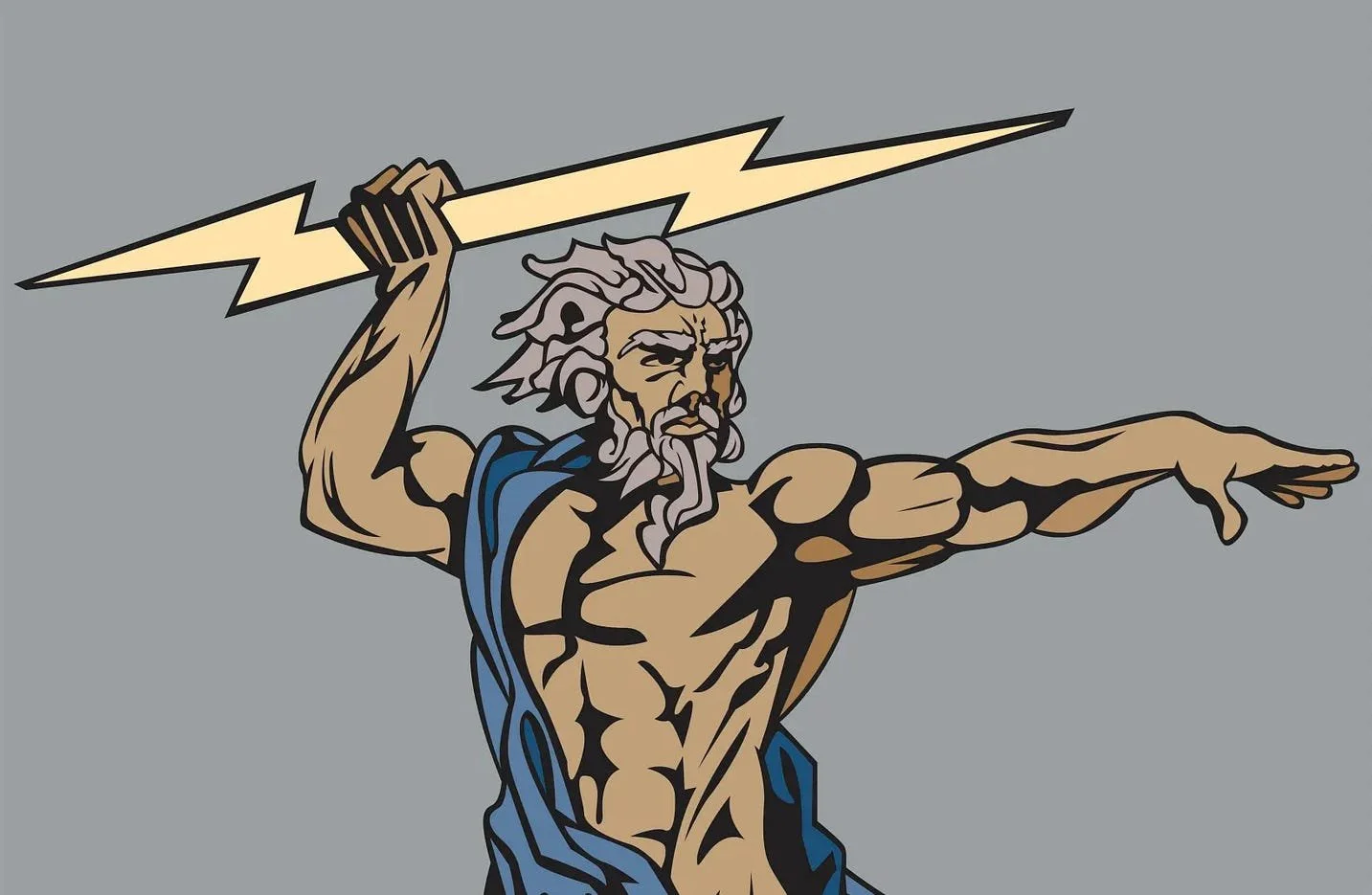
This helps ground, I think, the doctrine of analogy and the idea of modes of being.
How so?
Because Miller distinguishes two importantly different kinds of similarity. First, there is the sort of similarity where two things share some property in common. A red apple and a red shirt, for example, are similar because both are red.
But there is also another sort of similarity: the similarity between the members of an ordered series and the limit case toward which that series tends. A circle is similar to the polygons in the relevant series, but not because it is just another polygon with more sides. Rather, it is similar precisely as the limit case of that series.
And the relation between God and the world is like the second case. God bears a real similarity to creation—or better, creation bears a real similarity to God—but it is a similarity-in-radical-difference. God is not simply one more being who shares existence, power, knowledge, or goodness with creatures in the ordinary way. God is not a creature at all, but exists in an entirely different mode: as the limit-case instance of existence and of every pure perfection.
Once more, God is the paradigm existent, possessing essentially—and, as we will reiterate, simply—all these positive perfections. Everything else only shares in or participates in these perfections insofar as they are ultimately caused by God.
Finally, this limit-case understanding helps to swiftly alleviate another issue that is pressed against the doctrine of divine simplicity.
That issue concerns the identity claim of the divine attributes. After all, if God is absolutely simple, then the proponent of DDS must say—as the cliché goes—that ‘whatever is in God, is God.’ God just is His existence, His power, His knowledge, His goodness, and so on.
And the complaint is that this does not just sound strange, but is obviously false. After all, look at this battery. It has power, but not knowledge. Clearly, then, power and knowledge are really distinct.
But the proponent of divine simplicity can say: yes, of course they are really distinct in many cases—in creatures. Because in creatures we are looking at participated perfections, not the limit-case instance toward which those perfections tend.
So while it may initially seem dubious to say that power is identical to knowledge, goodness, existence, and so forth, the claim becomes much more intelligible once we specify that we are not talking about creaturely, participated instances of these perfections, but their unrestricted, uncreated, limit-case instance in God.
It is perfectly sensible to maintain that the non-limit cases of positive creaturely perfections are often distinct, while their respective limit cases are, in fact, the selfsame reality.
More simply put, when we say that God just is His power, just is His knowledge, and so on, this is not to say that creaturely power is identical to creaturely knowledge. Obviously not. Rather, it is to say that the unrestricted, uncreated, limit-case instance of power is identical to the unrestricted, uncreated, limit-case instance of knowledge—in God.
At worst, this is mysterious. But mysterious is a long way from outright unintelligible. Moreover, given the motivations behind divine simplicity, and given a background modes-of-being account, we have very good reason to think that, however mysterious this may be, it is actually true.
Remaining Objections
I cannot, obviously, cover every objection that has been brought against DDS in this article.(15) I do hope, however, that we have seen at least this much so far: several of the objections often treated as insurmountable are, in fact, exceedingly flimsy. They get their force almost entirely from misunderstanding what the Thomist is actually saying, or from forcing divine simplicity through a non-Thomistic metaphysical framework and then acting surprised when it comes out looking strange.
Still, I should at least give a nod to two other objections worth considering—the objection from modal collapse and the objection from Trinitarian theology—and say something, however briefly, in response to both. (There is, of course, considerable literature on both topics. My aim here is simply to get the reader started in what I think is the generally right direction, without pretending to hash out every detail.)
The modal collapse objection, basically, is this: if divine simplicity is true, then God is identical to His one simple act. But if God is identical to His one simple act, then (allegedly) there is no real distinction in God between God’s act of existing, God’s act of knowing, God’s act of willing, and God’s act of creating. Now, God exists necessarily, and so God’s act exists necessarily. But if God’s act of creating is identical to God’s necessary act, then it seems that God’s creating must also be necessary. And if God’s creating is necessary, then creation itself would seem to be necessary as well.
That is the worry. Contrary to common intuition—and, more importantly, contrary to Christian commitments—creation would not be contingent. It would not be something God freely chose to bring about. It would be necessary. Hence the ‘modal collapse’: the distinction between what is necessary and what is contingent appears to collapse. God could not have done otherwise, and the world could not have failed to exist.
Fortunately—for us, anyway—the argument is no good, because it fails to differentiate between the act in virtue of which certain things are brought about, known, willed, and so forth, and the things brought about, known, willed, and so forth themselves. In other words, it is precisely in the face of modal collapse concerns that the Thomist will quickly draw a distinction between intrinsic and extrinsic predications, showing that while it is true that God is identical to His one simple act, it can and should be denied that God is identical to His act of creation.
Let me now, again briefly, explain the idea.
Roughly, an intrinsic predication tells us something about a thing as it is in itself, whereas an extrinsic predication tells us something about a thing in relation to something else.
For example, ‘James is male’ is intrinsic. But ‘James is taller than his son’ is extrinsic, since that could become false without any intrinsic change in James. His son could simply grow. James need not mutate in any way whatsoever.
And this matters a great deal for divine simplicity. The identity claim central to DDS—’whatever is in God, is God’—applies to what is intrinsic to God. But claims such as ‘God is creator’ or ‘God created this world’ are extrinsic. Their truth depends not only on God, but also on creatures: namely, that creatures exist and depend upon Him.
So, in other words, the Thomist will deny that God is identical to His act of creation—at least if ‘act of creation’ is taken to include the created effect or the contingent relation creatures bear to God. God is identical to His single divine act, yes. But ‘creation’ adds something on the side of creatures, not something on the side of God.(16) God is identical to the act by which He creates, considered intrinsically, but not to ‘creating-this-world’ as such, where that phrase includes the contingent created effect or extrinsic relation.
In other words still, there is no new ingredient in God called ‘creating-this-world.’ There is God, the one simple divine act, and then there is the contingent created effect of that act. God, critically, does not change intrinsically at all in creating this world, nor would He have changed intrinsically had He created some other world—or no world at all.
This is why the modal collapse objection does not go through. The necessity of God’s intrinsic act does not automatically transfer to the contingent effects of that act. Differences in what God creates are located on the side of creatures—in the effects themselves, and in the relations of dependence they bear to God—not in any intrinsic difference in God. The collapse follows only if we confuse God’s necessary intrinsic act with the contingent creaturely terminus of that act.
The final objection worth mentioning concerns the Trinity. After all, if God is absolutely simple, then how can God also be three really distinct persons? Does that not introduce composition straight into God?
The first thing to say is that this problem is not really generated by divine simplicity as such. The basic difficulty belongs to Trinitarian theology more generally. After all, Christians affirm that the Father is God, the Son is God, and the Holy Spirit is God; and yet the Father is not the Son, the Son is not the Spirit, and the Spirit is not the Father. So the question—or what is sometimes called ‘the logical problem of the Trinity’—is already there: how can the three persons be really distinct, while each is fully and wholly the one God?
Giving up divine simplicity does not magically solve that problem. If anything, it creates new problems. For if the persons are treated as three distinct instances of the divine nature, we are headed toward the condemned heresy of tritheism. And if the persons are treated as parts of God, we have turned God into a composite whole and stumbled straight into the condemned heresy of partialism. Neither option is acceptable.
So, in one sense, it might be worth leaving things there. Divine simplicity is not really compounding the problems one faces in giving an account of orthodox Trinitarianism. If anything, it may actually help by setting certain conceptual bounds: whatever account we give, it cannot treat the persons as three distinct gods, nor as three parts of God. In that sense, DDS helps rule out heresy rather than generate it.
But I will not just leave it there, since Aquinas—as usual—offers something I find particularly promising. Here, as you can imagine, there is so much to say. So, one final time, I will ask the reader to accept a rough introduction—an executive summary, if you will.
Aquinas’s approach, effectively, turns on two key ideas.
First, we need to distinguish different senses of identity. There is strict identity, where if a is identical to b, then everything true of a is true of b. But there is also what W. Matthews Grant calls entitative identity, where two realities are the same in being, even if not everything predicated of one is predicated of the other.(17)
And for Trinitarian theology, what matters is entitative identity, not strict identity. The claim is not that the Father and the Son are strictly identical, as though everything true of the Father must also be true of the Son. That would be false, since the Father begets and the Son is begotten. Rather, the claim is that the Father, Son, and Holy Spirit are not three beings, substances, or instances of divinity. Each is wholly the one divine essence.
So, qua divine essence, there is no difference in being, substance, or divinity. But qua person, or qua relation, the Father is not the Son, the Son is not the Spirit, and the Spirit is not the Father. The Father begets; the Son is begotten; the Spirit proceeds.
In other words, by appealing to these different senses of identity, we can begin to avoid certain logical objections to the Trinity. We can say, really and truly, that qua divine essence, the Father is God, the Son is God, and the Holy Spirit is God; but qua relations/persons, the Father is not the Son, the Son is not the Spirit, and the Spirit is not the Father.
Now, as I said, none of that is a particular problem for proponents of divine simplicity. Really, any Christian who maintains orthodox Trinitarian theology is going to have to deal with the issue of how, as it were, three persons can be one God.
Second—and this does relate more directly to the doctrine of divine simplicity—Aquinas appeals to relation. Why relation? Because relation—as a category of being—is peculiar. Many features of a thing—qualities, quantities, shapes, colors, and so on—seem to inhere in a subject and thus add some further metaphysical constituent to it, at least on Aquinas’s ontology. But relations need not work that way. To say that James is taller than his son, or loved by his wife, or known by his friend, does not require some new internal ingredient to be added to James. These relational truths can be real without introducing a new (metaphysical) part into the subject.
That is why relation is so important for Aquinas. It gives him a way to account for real distinction without composition. The divine persons are really distinct, not as parts of God, nor as three instances of a shared divine nature, but as subsisting relations.(18) The Father is not the Son because begetting is not being begotten. Yet the Father and the Son are not two gods, nor two parts of God, because each is wholly and completely the one divine essence.
So at least to this extent—and with whatever mysteries remain concerning the Trinity, and admittedly, there are some— we have good reason to deny that simplicity and Trinity are logically incompatible. If anything, divine simplicity seems to provide a conceptual safeguard for understanding the Trinity in precisely the way needed to avoid heresy.
Conclusion
I have aimed to both introduce and defend—to some extent, anyway—the traditional doctrine of divine simplicity. My initial effort was to provide a swift and straightforward conceptual argument for divine simplicity, one aimed at showing its central importance in the philosophy of God. I then turned toward the more specifically Thomistic understanding of the doctrine, arguing for its intelligibility against what are often seen as devastating objections.
Such objections, it turns out, are anything but.
I finish by noting that what many people take to be a strange or peculiar doctrine of God is one I find personally enthralling and captivating. It has always seemed right to me that if we are thinking and talking about God, such a matter should not be wholly familiar. Whereas many worry that all this simplicity talk makes God seem a bit too alien, my concern is that their alternative way of speaking makes God seem far too creaturely—just not the sort of reality that could be the absolute foundation of all reality.
God is, after all, the Absolute, the One, the eternal Father of Lights. The doctrine of divine simplicity, at bottom, is what helps to secure, theoretically, God’s ultimacy, independence, and aseity, while providing a clear point of differentiation between God and everything God has created.
Everything other than God is a composite entity: something that is not the fullness of existence itself, but a finite being sharing in various perfections and made up of constituents. Such beings are not only finite, but, given their composition, frail.
But God is not frail. Given simplicity, God is neither finite nor composite. God is invulnerable, in all the ways we ourselves are vulnerable, with respect not just to existence, but also power, knowledge, goodness, and all the rest.
Finally, strange as it may initially seem, the doctrine of divine simplicity ultimately appears far more beautiful than many people first recognize. For on this account, God does not simply have love, nor is God in any sense conditionally loving. God just is love—right in line with the report of Scripture—just as God just is goodness itself.
There is no paradigm of these things over and above God. God is the paradigm of them all: love, goodness, power, knowledge, existence itself—not as scattered perfections collected together, but as one simple, infinite, and unfathomably brilliant act of divine being.
Pat Flynn is this-close to completing his PhD, which focuses—no surprise—on the doctrine of divine simplicity. He currently holds two master’s degrees in philosophy and has numerous publications in metaphysics, metaethics, philosophy of religion, and philosophy of God. He is the author of six books, including The Best Argument for God. He lives in Wisconsin with his wife, Christine, and their six children. On many weekends, you can find him playing music in his Van Halen tribute band, Top of the World. He also likes to swing kettlebells. You can follow Pat on Substack at The Journal of Absolute Truth.
See Aquinas, Summa theologiae I, q. 3, especially aa. 2–7.
Patrick Flynn, ‘Simply Put: The Argument for Divine Simplicity,’ forthcoming in American Catholic Philosophical Quarterly. I should also note that in this article I consider several proposed alternatives to the Thomistic understanding of divine simplicity—including Scotistic proposals, top-down grounding models, and others—and argue that each proposal either renders God a derivative entity, is conceptually untenable, or else collapses back toward the stronger Thomistic understanding.
Again, see my article ‘Simply Put: The Argument for Divine Simplicity’ for such an assessment.
Unlike physical parts, metaphysical parts are not necessarily the sort of thing you can separate or place side by side on a table. Nevertheless, they are ‘parts’ in the sense just articulated: they contribute to the being of the whole while not being identical with that whole. Nothing about being a part, after all, requires that it be physically separable—or even physical at all.
W. Norris Clarke, The One and the Many: A Contemporary Thomistic Metaphysics (Notre Dame, IN: University of Notre Dame Press, 2001), 158.
Aquinas, De ente et essentia, ch. 4.
See again Aquinas, De ente et essentia, ch. 4.
For a contemporary defense, see Gaven Kerr, ‘Essentially Ordered Series Reconsidered,’ American Catholic Philosophical Quarterly 86, no. 4 (Fall 2012): 541–555, https://doi.org/10.5840/acpq201286445.
Aquinas, Summa theologiae I, q. 3, a. 4.
Craig, Systematic Philosophical Theology, 2a:160.
Aquinas, Summa theologiae I, q. 13, a. 5.
Craig, Systematic Philosophical Theology, 2a:163.
See Patrick Flynn and Daniel Vecchio, ‘Worse Than Magic: Two Answers for William Lane Craig—and One Challenge,’ forthcoming in New Blackfriars.
Barry Miller first introduces and deploys the notion of a limit case in defense of the doctrine of divine simplicity in Barry Miller, A Most Unlikely God: A Philosophical Enquiry into the Nature of God (Notre Dame, IN: University of Notre Dame Press, 1996), especially chap. 4; he defends and develops it further in The Fullness of Being: A New Paradigm for Existence (Notre Dame, IN: University of Notre Dame Press, 2002), p. 137–150.
For an extended defense of classical theism (including but not limited to DDS), see my book The Best Argument for God (Manchester, NH: Sophia Institute Press, 2023).
For a further defense of this extrinsic model of divine agency as deployed against modal collapse objections, see W. Matthews Grant, ‘A Thomistic Account of Divine Simplicity,’ in Contemplating Divine Simplicity: Five Views, ed. Ross D. Inman (London: Bloomsbury Academic, 2026).
See again Grant, ‘A Thomistic Account of Divine Simplicity.’ Importantly, this distinction is not ad hoc; it has roots in Aristotle. For example, action and passion can name one and the same underlying actuality while differing according to how that actuality is considered. Action and passion, then, can be entitatively identical while not being strictly identical.
Aquinas, Summa theologiae I, q. 28, aa. 1–3.
