Thomism: Teleology
In previous essays I have outlined several major Thomistic teachings, those which are central to Aquinas’ metaphysics, and thus to everything else philosophical and theological in his writings and those of the Thomistic tradition. But one major theme has been left aside until now, not because it is unimportant, but because it crosses all other domains of import, and that is teleology.
Though I did briefly touch upon this topic when detailing nature, form, and matter—precisely inasmuch as form is the determining principle of nature and nature the determining principle of activity (and passivity)—we must attend directly to teleology if we are to understand its significance in general, as well as its centrality to the whole Thomistic worldview. Indeed, it is fair to say that teleology stands at the center of the Thomistic conception of the world, as that feature of reality which unites the natural cosmos as a domain of being in a state of becoming. Since the natural cosmos is not static but unfolds slowly over time and history with an inner logic that is end-oriented, teleology underwrites the interconnected order of the whole world—or, at least, that is what I will here make clear. The grounding reason for this lies in the truth that the world is a creature of the Creator, so that everything can be understood to come forth from the hand of its creative cause in order to return to Him via its embedded natural orientation to return to Him—each thing in its own way, according to its kind, by following through on its naturally determined activities.
But I am getting ahead of myself. Aquinas does not begin with God and the act of creation but with the things of the natural world and their determinate activities, activities that are understandable only if we understand them as end-oriented—and thus as teleological, for to be teleological is to have a logic (logos) determined by an end (telos). And it is from precisely this perspective (as one among many other bases) that Aquinas concludes to a Creator—whom we can then understand as intellectual and free, and thus as personal—before returning to these same natural things with the power to view them and their activities on the basis of this new divine vantage point. And it is precisely from the perspective of this higher vantage point that we can truly perceive the subtle order of the cosmos, by understanding each thing in itself and all things in their interrelation, together with their universal and common relation to God, all via the interwoven teleological character of their incredible varied natural activities. Teleology is then truly that by which we can understand all things most adequately. Simply stated, discerning their teleology casts the greatest light on all things.
So, let us begin at the bottom, with things and their natures, and from there trace Aquinas’ reasoning about the natural world, before concluding to God, and then following the route backward toward things now cast in a new light.
When we look to the natural world, to each natural thing in itself, and to all natural things differentiated by kind, we discover that their activities are both definite and orderly. And this is just to say that their activities are not indefinite and chaotic, for something is either definite or indefinite, orderly or chaotic, and natural activities are evidently not indefinite and chaotic, for their activities accomplish things—determinate things in determinate ways. Mass gravitates toward mass, plants send roots and shoots in opposite directions, animals forage for water and food, and humans seek friendship and truth. Well, these differentiated natural substances do these things ‘always or for the most part’—always, by nature, unless frustrated, by impediment. And just so we see a number of important things, that natural things are the source of activities that achieve determinate things, that these activities arise out of their formally determined natures, and that these same activities are ordered toward the attainment of determinate ends, ends that are good for the actor, its species, and the ecosystem within which it is cosmically embedded. Thus, the activities of the things of the natural cosmos are essentially teleological.
Now, what exactly does all this mean? What is its import?
Well, first of all, we have discovered that the very natures of the things of the natural world come to be known by us through their naturally determined teleological activities. Second, we have discovered that these same things realize their perfection by attaining their good through acting in accord with their formally determined natures. And it is precisely here that we find operative a basic metaphysical principle, namely, that action follows being (agere/operari sequitur esse), since action both manifests the being and nature of each thing, while simultaneously orienting this same thing toward its own maturity, its naturally determined perfection.
Let us take a simple example to illustrate the point, by asking the question: ‘What is the heart?’
In answer to this question, we could begin by saying that the heart is an organ of the body, animal and human, one among many that constitute the organization of the body; and moreover, that the heart is composed of cardiac cells, and at a lower level, of atoms and molecules, and again at a lower level still, of subatomic particles, etc., etc. Yet, having given this material explanation—and described the heart as a part made of parts—we still haven’t answered our basic question, for it is only by detailing ‘what the heart does’ that we can begin to understand ‘what the heart is.’ We have to understand the activities of the heart precisely in view of what these activities accomplish if we are to understand the nature of the heart. And that is to say that since the logos of the heart (its logic or meaning) is provided by the telos of the heart (its end or purpose), the heart is understandable to us only in terms of its inner teleology. So, let us then generalize and say that we can understand ‘what’ anything is only when we come to understand ‘why’ it is, since the ‘why’ explains the ‘what’ must fully. And this is why we feel compelled to ask ‘why’ questions, for all our questioning finally resolves only when our questioning terminates in some ultimate ‘why.’ This is to come to a teleological understanding, and this is exactly why children (who have not been unschooled of this natural intellectual dynamism) continue to ask, ‘Why, why, why, why?’ until we adults get tired and answer with a brute fact, ‘It just is.’ But this is to fail our children and the most natural movements of their nascent minds.
Now, where we find the presence of teleology—which we now see is everywhere—there too we find the presence of intention, for intention in general is nothing other than the stretching-forth of one thing toward another thing in some determinate way. When this is then applied to the orientation of action, intention becomes teleology, for action inherently stretches-forth toward the attainment of accomplishment of something determinate, which is its end (telos). Furthermore, where we find the presence of intention—which we now see is also everywhere—there too we find the presence of intelligence, for intelligence, practically considered, is nothing else than the stretching-forth of the mind toward what might be—and that is both more goodness and more perfection, which is nothing else than the end of action. Moreover, only intelligence can be intentional in this fulsome way, for only intelligence can select an end, the path toward that end, and command the execution of what is required to attain or accomplish that same end.
This means that determinate action which attains a determinate end signals the determination of intelligence. And it does so by necessity, for we cannot possibly account for the determinate activity of any given thing toward its own perfection in any other sensible way. Or, otherwise stated, but now from an epistemological point of view, we cannot possibly understand or explain determinate activity without recourse to intention and intelligence. For what reason could we then give for natural things acting rather than not acting, and acting in determinate ways (that are both good and the cause of further perfection) rather than in number of alternate ways, aimless and random, indefinite and chaotic? We can give no reason, for we cannot understand or explain any action without referring it to its end, and thus we can give no account for what is manifestly happening before us. All we can say is that it just is, and it is some wonderful happenstance that all is for the good and best.
Therefore, should we grant the intelligibility of action, for its meaningfulness rather than its vanity, we must simultaneously grant its inherent teleological character. And this is true for all action as such, inclusive of the whole of the natural cosmos, each thing individually and the order of the whole that is wrought by the mutuality of the actions of things.
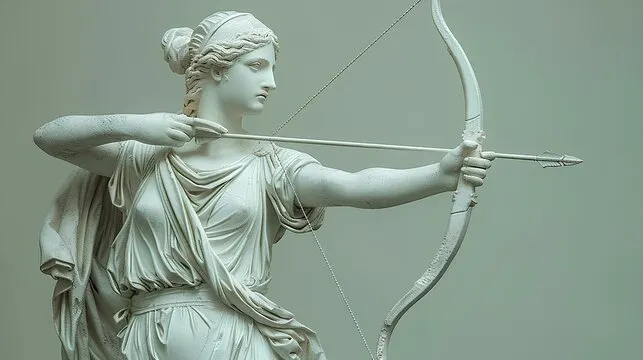
But, here we then have a problem. Though all action reveals the presence of intelligence in this way, via its intentional teleological structure, we simultaneously see that none of the innumerable things of the natural world—save humanity—are actually intelligent. And this is simply to say that we see no evidence of intelligence in the inanimate or animate species of the natural world—neither in the rock, the rose bush, the bunny rabbit, or indeed in any higher order animal—for we see no ability in them to stand back and purview their own actions from the perspective of the universal good. the sine qua non of selecting an end. And yet, by acting in determinate ways and attaining what is good and perfect for themselves and their kin they all act intelligently. And moreover, in so acting faithfully in agreement with their natures, the whole of the natural cosmos has its amazingly harmonious order, according to which any good whatsoever can be attained or accomplished. Let me state this negatively, if each thing did not act in a faithfully teleological way, no harmony could be had, and no good could be attained.
But this simultaneous presence of intelligence in activity while lacking intelligence in power simply must be explained.
It can be explained first by recourse to the principle of teleological action in the natures of the things of the natural world—which themselves exhibit intelligence without being intelligent—and thus, by immediate implication, to the origin of the natures of these things. Without recourse to the origin of the natures of reality, and thereby to the teleological determination of their natural activities, we cannot account for their intelligent actions. Therefore, we must conclude that the natural activities by which the good and perfection is attained, and by which all things are knit together in an ordered cosmic whole, witnesses to the Intelligence that lies beyond the whole of reality and every singular thing standing in existence with the power to attain the good. It witnesses to God, an intelligent God, and thus a personal God. Again, it witnesses to God’s guidance of the actions of all things, things He first intelligently creates things, and then intelligently guides them toward their own proper completion, which is nothing else than the completion of His creation of them. Simply, He wills their good; He wills their perfection; and He wills it all for their sake—with no gain for Himself. The presence of intelligence in things lacking intelligence then evidently bespeaks of an intelligence that stands behind all things, coherently arraying them in their mutually ordered activities within a faithful cosmic order. This presence of intelligence in activity is then obviously a natural revelation of a God who not only wills things to be, but who also wills that they become fully themselves. It is a distinctive revelation of God as Creator and Provider.
And thus we also find operative another basic metaphysical principle, namely, that causes always make effects like themselves (either specifically, generically, or analogically); and conversely, that effects always resemble their causes (again either specifically, generically, or analogically). In accord with this principle, and since all creatures are created effects of their Creator cause, all things are like Him—exhibiting something of His perfection in being, while also falling short of exhibiting this perfection in all its glory—which means that all creatures are seeking a greater likeness to their Creator when they are actively seeking their own perfection. And it is with this last statement that we begin to glimpse something of the grandeur of the natural activity, for we come to see that teleological activity writ large in the natural world reveals the intimate presence of an intelligent Creator, who has hand crafted the natural world as a mirror of His goodness. And we thereby also come to experience the gratuitous presence of divine wisdom and love in all things, inasmuch as we discover how divine wisdom and love guides the whole of creation toward its naturally appointed end: a greater likeness of Him who is its creative Cause, and a witness to His majesty.
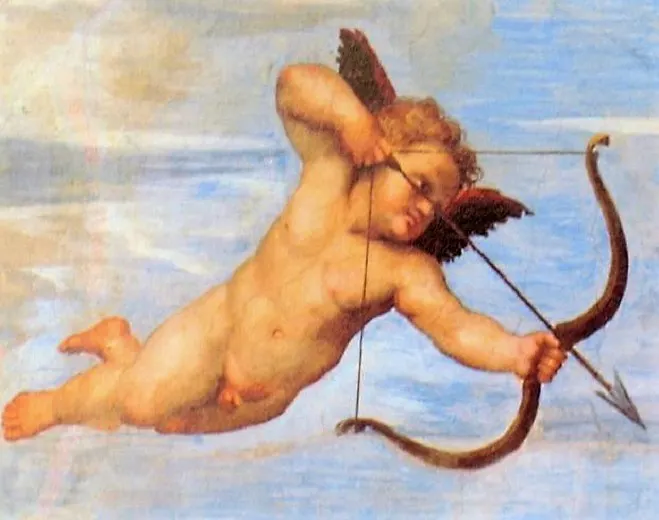
Let us summarize some of the central points: It is evident from experience that natural things act in determinate ways in view of attaining determinate ends. The ends attained via action are good for the acting agents—the individual and its species, within the integrated whole of the cosmos—ends by which these same agents attain their natural perfection, the ultimate intrinsic good of their action. Moreover, not only do these natural agents attain their own goodness and perfection, by so acting they also witness to their Creator and Provider, while simultaneously attaining ever greater degrees of likeness to Him. This last insight follows from the fact that teleological activity necessarily exhibits both intentionality and intelligence, so that the intentionality and intelligence of natural things must be located beyond the natural cosmos in a transcendent Creator. And just so, we see that teleological activity simultaneously reveals several things of eminent significance: 1) the natures of the active agents themselves; 2) the orientation of these agents toward maturity and perfection; 3) the presence of a providential Creator who is both wise and loving; and 4) the increasing likeness of creation to its Creator as it unfolds through time and history, in a way that is coincident to creation attaining its own perfection.
