Thomism: Nature—Form & Matter
Understanding the natural world as a harmonious cosmos constituted of two correlative principles, matter, a material principle, and form, an immaterial principle.
The English ‘nature’ is a cognate of the Latin ‘natura,’ which traces its roots into the idea of generation and birth. From this we get the sense that nature and the natural world is primarily understood in light of the ongoing cycle of the generation, where developmentally mature individuals—typically together with others differentiated by sex—produce other individuals of the same kind. Out of this humble basis in generation, the term ‘nature, natura’ evolved to come to identify ‘what’ things are, their beingness or essence. This is a sensible development given the way each thing reveals ‘what’ it is through its proper activity, and what activity is more revelatory than that act by which another of the same kind is produced. Accordingly, as I indicated in a previous essay, ‘nature’ signifies essence but now with explicit reference to the activity that flows from the thing on the basis its essential determination. Essence determines and activity reveals, and this is nature—so that one word ‘nature’ encodes the metaphysical principle ‘action follows being, agere/operari sequitur esse.’
Now, for Aquinas, the natural world is constituted of a plurality of natural substances of differing natural kinds. Every natural substance has being according to its own specific nature, where the nature identifies the kind of thing the substance is in view of its proper activity. When the natural substance is a living substance (the paradigmatic kind of substance in Aquinas’ thought), nature is the source of all movement in place (local or postural change) and all growth and development (quantitative and qualitative change) as the living substance progresses towards maturity (at which point it can then, as noted above, produce another of like kind). Accordingly, Aristotle concludes, ‘For any living thing that has reached its normal development the most natural act is the production of another like itself, an animal producing an animal, a plant a plant, in order that, as far as its nature allows, it may partake in the eternal and divine.’1 And Aquinas similarly concludes, ‘the generator intends the form of the generated, which is the end of generation, not as an ultimate end, but to be a likeness of God in the perpetuation of the species and in the diffusion of God’s goodness.’2

In accord with their natural determination, all substances can then be classified by their similarity to and differentiation from one another, which gives us the possibility of forming a philosophical taxonomy that arranges things into groupings from the most wide to the most narrow. When individuals are classified together with others of the exact same kind, they are identified as of the same ‘species,’ and when they are the classified together with others of similar constitution, from most to least wide, they are identified together as of the same ‘genera’ (sg. ‘genus’) of varying degrees of closeness to the species as the classes become more and more specific. This manner of classification then provides us with an ability to define the nature of each kind by identifying the proximate genus together with the specifying difference of the species within that genus. In this way the human is defined as a ‘rational animal,’ where animality identifies the proximate genus and rationality the specifying difference, so that both together provide us with the species. Though such a manner of defining does not identify all essential features in an explicit way, it does capacitate us to successfully pick out the individuals of each species in their distinction from others, for our intellectual capacity is well attuned to making decisive distinctions, even while it falls short of being able to easily exhaust the essences of these same realities with our definitions.
Hylomorphism: The Matter-Form Composition of Natural Substances
Now, given the reality of change in the natural world—substantial, local and postural, quantitative and qualitative—we can deduce that natural substances are a composite of matter and form. Matter (materia, ὕλη [hyle]) is that out of which every material substance is made, and form (form, μορφή [morphe]) is that through which these same substances are ‘what’ they are. Matter is then an indeterminate substrate of material substances, a principle of potency, and form is an actualizing determination of these same substances, a principle of act. Thus, form inwardly determines and outwardly circumscribes its material substrate so that we have a natural material substance of a specific kind. The form is then also the foundational principle of all further activity by the substance through which it accomplishes its natural good as an individual of this or that species within the natural world as an ordered cosmic whole. This is the natural teleology (‘goal directedness’) of the substance, and this is how the substance relates to and cooperates with everything else in its immediate environment.
And so, in all natural material substances, form does the following (work):
Actuality of material potency.
Unification of material diffusion.
Structuration of material parts.
Specification of kind.
Identification through time and change.
Definition of intelligibility.
Ordination toward perfection.
Empowerment for action.
In sum, form makes every natural material substance ‘be’ and ‘be what it is,’ and thus brings most to the table, metaphysically speaking, in the constitution of the natural world, by both determining the nature of each substance, and everything that follows upon that same nature.
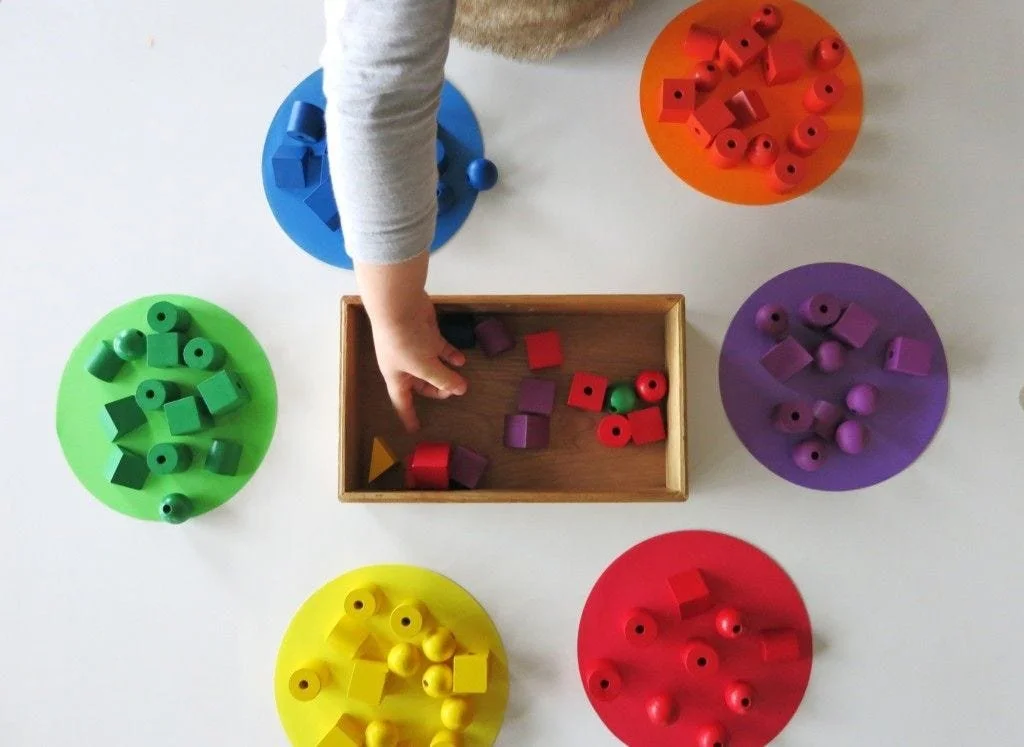
Thus, since matter is a principle co-relative to form, and since form has priority in the structure of substances, to every form there corresponds an appropriate matter. At the most foundational level, following Aristotle, Aquinas posits prime matter (materia prima) as that which undergirds the entirety of the material world. Prime matter is a principle of ‘pure’ potency and is never found in actual being without some or other kind of formation. This reveals two things, that prime matter is the ultimate substrate of everything material, undergirding all being and becoming, and that prime matter can be understood only in its relativity to substantial form, and is actually unintelligible in itself. Prime matter must then be distinguished from secondary matter, which is already formed matter that provides the substrate for further levels of formation, such as that brought about by human artifice.3 And prime matter must then also be distinguished from the material parts that compose material substances, such as all those levels of material structuration within a substance, and which are especially evident in the organization of living substances into organs that function relative to one another for the good of the whole.
Conclusion
Matter and form are then obviously two distinct but inseparable co-principles of all natural material substances, principles that are entirely co-relative to one another in the make-up of these substances, and that are then also entirely co-constitutive of these same substances. The substantial unity so formed is then a unity of the highest degree, inasmuch as it is a unity forged of the tight or intensive ontological correlation of act and potency. Finally, from what has been said we must take note of something of utmost importance, namely, that form is an immaterial principle of the material world. Since form is co-relative to matter—as the act of matter’s potency, the determination of matter’s indeterminacy, and the intelligibility of matter’s unintelligibility, etc.—form is not matter. Therefore, we must conclude that form is an immaterial co-principle of the natural world, determining matter as something other than matter. And since what we negatively identify as immaterial we positively identify as spiritual, form is a spiritual co-principle of the natural world, which spiritual determines the natural world as something inherently meaningful in a wholly objective way.

Aristotle, On the Soul, Bk. II, Ch. 4.
Aquinas, Summa contra gentiles, Bk. 3, Ch. 22.
Artificial substances differ quite dramatically from natural substances, inasmuch as they are made by human artifice and composed of natural substances, and, more importantly, inasmuch as their form is externally imposed upon secondary matter without intrinsically determining the prime matter out of which the secondary matter is constituted.
