Thomism: Being & Essence
In a previous essay I noted that Aquinas affirms that ‘being is the actuality of all acts and, therefore, the perfection of all perfections.’ I there also indicated that this maximal statement should be taken with all seriousness, as it reveals being to be the founding principle of everything. For the Thomist, being is the basis of everything we say actually ‘is.’ As the actuality of reality itself being permeates all things in all ways, actualizing the harmoniously ordered cosmos, so that it is the alpha and the omega of absolutely everything. In that essay, I also noted that the English term ‘being,’ a participle of the verb ‘to be,’ translates Aquinas’ Latin term ‘esse,’ which is the infinitive of the verb rather than its participle. Esse can then be more literally translated as the ‘to be’ of things, so that the first principle of Aquinas’ metaphysics can then be retranslated more forcefully as ‘to be is the actuality of all acts and, therefore, the perfection of all perfections.’
Being is then not only the most basic principle of reality, founding and pervading all things, it is also the most basic principle of the theoretical system of Thomism, founding and pervading the whole Thomistic conceptual framework. The Shakespearian dictum ‘to be or not to be?’ is then a truly Thomistic question, the question that is both most foundational and most important for Aquinas. And it is because of this foundationality that it is, in a certain way, the only question Aquinas answers throughout the entirety of his philosophical (and theological) writings, with an answer that is both simple and complex—simple in its all-encompassing character, and complex in its attention to the subtleties of being. That complexity begins with essence, for the first ‘thing’ that being actualizes is essence. The Latin for essence is ‘essentia,’ which is a classical neologism crafted by Cicero to translate Aristotle’s use of the Greek term ‘ousia (οὐσία).’ As used by Cicero, and all Latins thereafter, essentia literally means ‘beingness.’ Essence then means the beingness of beings: the dogginess of dogs, the catness of cats, and the humanness of humans.

Every real being (ens) is then a composite of being (esse) and essence (essentia)—where essentia and ens are derived from esse, both linguistically and actually. In this composition, essence qualifies being by determining it in this or that way, so that the being so actualized possesses a certain range of perfections without exemplifying the fullness of being in all its perfections. Essence does this by contracting the received actuality of being and determining it in this or that way by furnishing a terminus for being, so that a thing of a particular kind can come into being with some features and not others. Now, in determining being in this way, essence also determines its intelligibility, making the so actualized things knowable and understandable to the human mind as the kinds of thing they are. This is needed, for Aquinas, because the human mind cannot actually ideate being itself, but is able only to judge (iudicare) its presence. The contraction of being that essence provides then positively delimits being so that it can be apprehended by the human mind. Hence, in two closely correlated intellectual acts, in the judgment of being and the apprehension of essence, the human mind can alight upon the two fundamental principles of reality, and thus know reality in accord with the very nature of things. We can then restate this simply by saying that being answers the question, ‘Is it?,’ while essence answers the question, ‘What is it?’
Looking a little closer at essence it is worth here considering other terms that Aquinas uses as substitutes for it in various circumstances, but which nonetheless approach it from different perspectives while adding different aspects to our understanding. These are the terms ‘nature (natura)’ and ‘whatness (quiddity).’ Whereas essence identifies the determination of any given thing with sharp metaphysical precision, nature signifies this very same determination but with explicit reference to its proper (teleological) activity, while whatness identifies this determination again but now in terms of its intelligibility, that is, its potency to be known and understood. (In a later essay, when discussing the further composition of material being, I will treat another substitute for essence, namely, ‘form, forma,’ and there show its meaningful coincidence with essence) Let us also look a little closer at the meaning of being by considering it from the perspective of existence, for a distinction can be drawn between these terms that appear so closely related that they are often used as synonyms. Whereas being signifies the undergirding principle that actualizes everything real, existence (from the Latin ‘ex-sistere, to stand forth’) signifies the way the resultant beings stand out in the world, that is, with presence, power, and action.
To say the least, then, being makes all the difference in the world, for it represents the difference between something and nothing—between some-thing and no-thing. Whereas non-being is completely without reality, being inert in the strongest possible sense, having no presence, power, or action, being is actuality and dynamism in one, interconnected and interrelational, possessing presence, power, and action all together. There is therefore no greater difference than the difference separating being from non-being; it is diversity at its greatest, for there is nothing shared between them. In the end, a great chasm divides being from non-being, a chasm captured well by Shakespeare’s Hamlet. Though Shakespeare was likely not riffing on Thomistic metaphysics when he places ‘that’ question on the lips of Hamlet as he grapples with his own life and death, he does in effect bring us right to the heart of Thomistic metaphysics—and he does so, just like Aquinas, by considering being in its infinitive form: ‘to be or not to be.’
Now, it is perhaps only from the perspective of life and death that we can take hold of the existential weight of being. From its perspective the significance of being leaps into the foreground as something of ultimate value, as that value without which nothing else can be valued. To live a personal life is to possess an exalted mode of being, and to take a hold of this life in the face of its vagaries is to respond to this great gift with appropriate gravity. This becomes still more clear when we look at the way persons, as living beings, are ordered toward perfection. In the basic impetus of life to grow, develop, and mature, we see that the order of life toward perfection is attendant upon the attainment of more being, where perfection is equal to more being, and more being to perfection. The ‘to be or not to be’ of personal life is then that which clarifies the significance of being itself, for it is precisely from this vantage point that we not only experience the significance of our own being and that of our loved ones, but we can also begin to take cognizance of the very significance of being itself.
This is all most eloquently restated by another Shakespearean nugget lifted from Hamlet, when Polonius says, ‘to thine own self be true.’ With persons the order of being toward perfection travels the very same path as the call of personal being toward authenticity, in the call to realize the meaning of one’s own being and life—to be a ‘persona’ and not a ‘hypokrités (ὑποκριτής).’ There is a deep paradox here, it is the paradox of being a person—where one discovers that living-up to one’s own being simultaneously situates you within the communal and cosmic whole—but that is for another day and another essay.
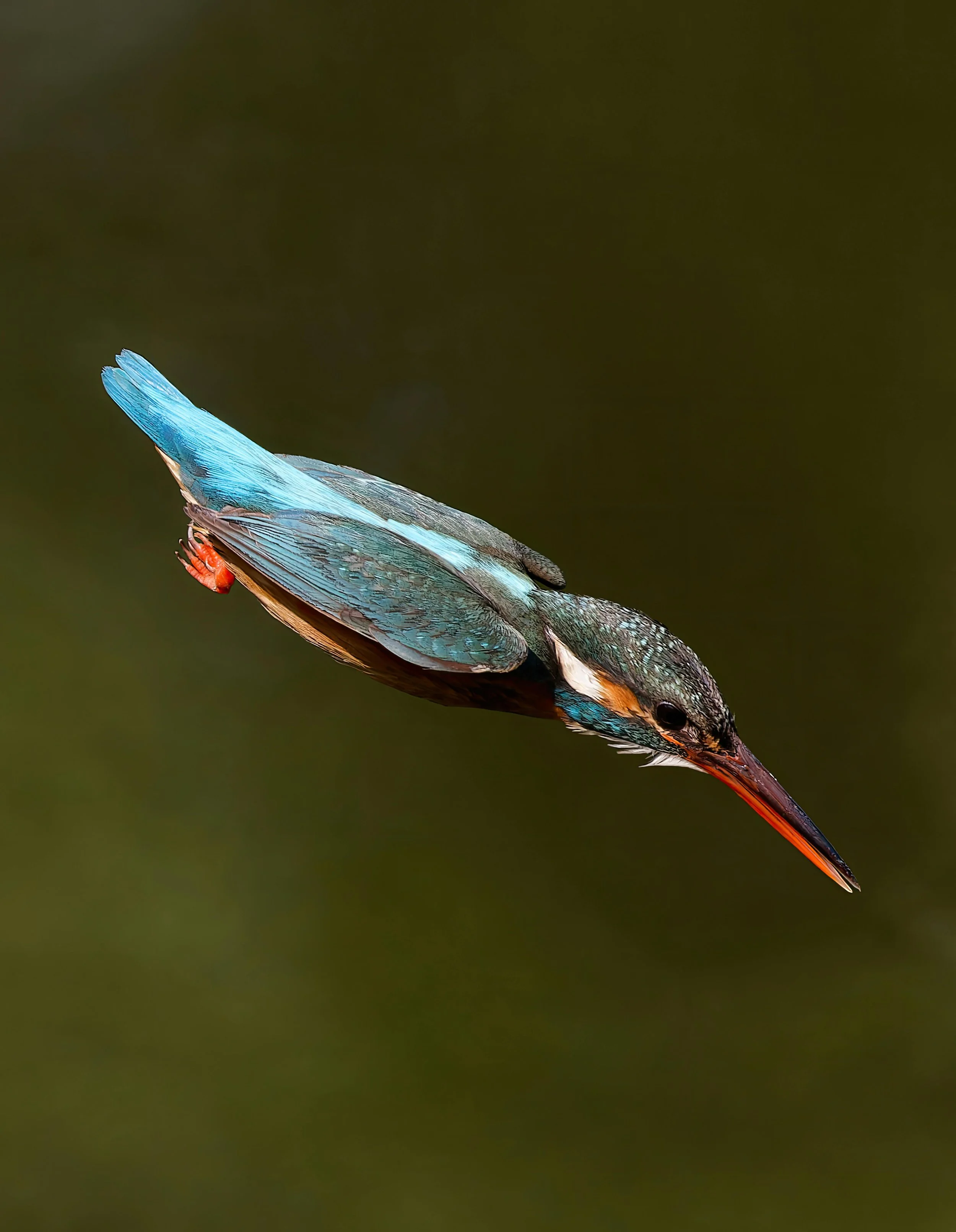
Here, finally, let us note that another literary artifact captures the significance of being from a personal perspective with arguably greater eloquence than is found even in Shakespeare. In the poem, ‘As kingfishers catch fire…’ by Gerard Manley Hopkins, we find the following lines:
Each mortal thing does one thing and the same:
Deals out that being indoors each one dwells;
Selves—goes itself; myself it speaks and spells,
Crying Whát I dó is me: for that I came.
In these lines, possessing an insightfulness with which Aquinas would surely agree, we hear the cry of being in all its glory… even together with its essential finitude. In the next essay, we will look squarely at this finitude as we begin to explore the Thomistic conception of Creator and creation, for with being and essence we already have enough of a conceptual toolkit in place toward considering the source of all finite being in Being Itself Subsisting (Ipsum Esse Subsistens).
